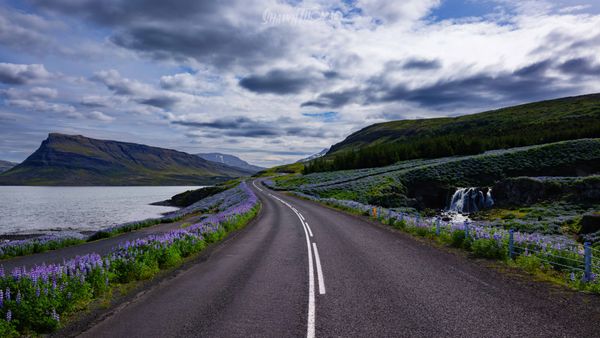
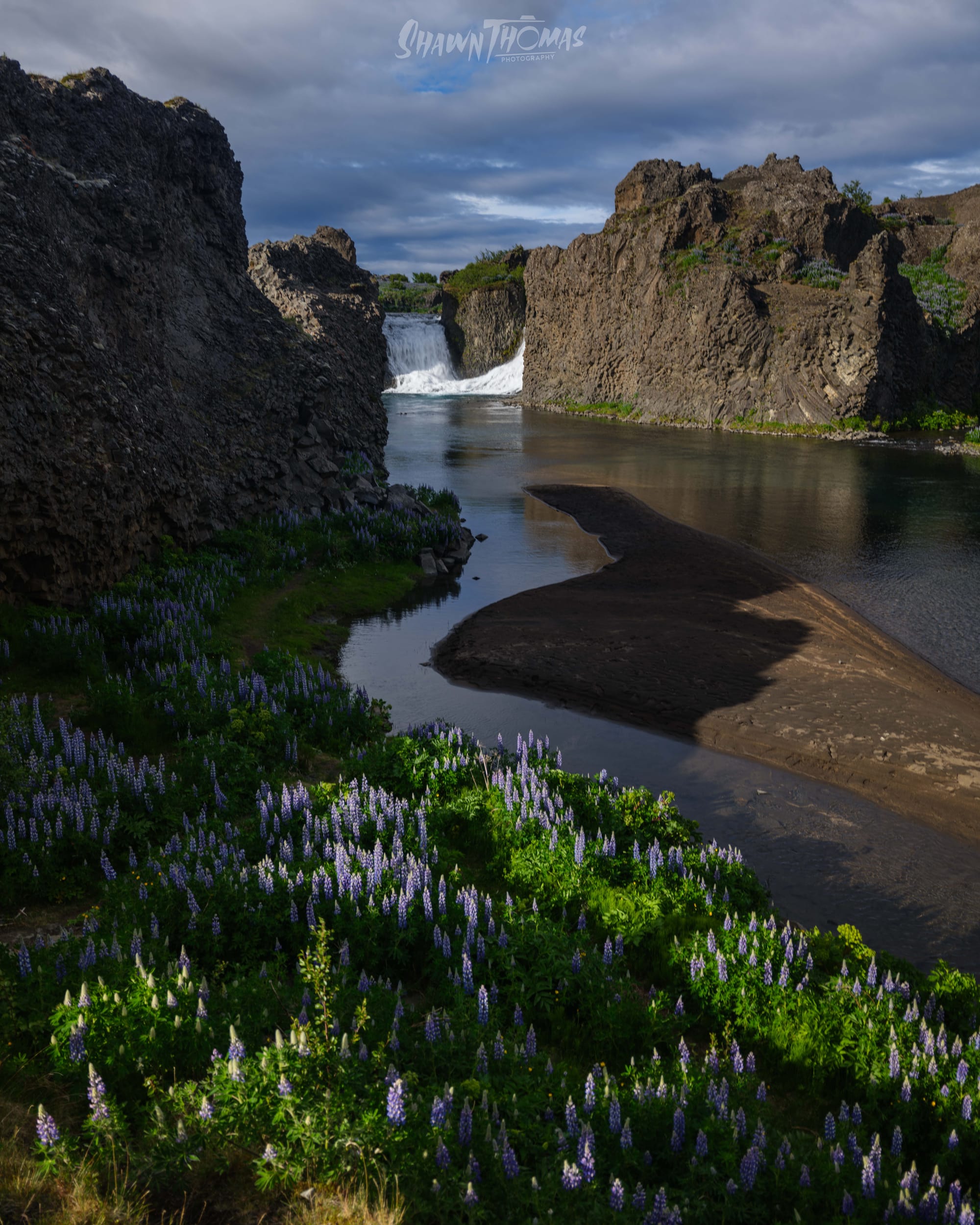
A random roadside in Iceland, they all look like this
Across Iceland with the Fuji GFX 100 RF - A Review
The Fuji GFX100RF is a 100 megapixel medium format camera with a major identity crisis. Brilliant in dominant blues, flat in nuance, and not weather-sealed in a country made of rain. An honest review from a week shooting it across Iceland, with comparisons to the Leica Q3 and Fuji X100VI.
The Fuji GFX100RF is a camera I was both excited about, and confused about from the moment I heard about it, especially given how much I love Fuji and I love my X100VI. So when my friend Don Wright gave me the chance to borrow the GFX for a trip to Iceland I jumped at the opportunity, it felt like a dream pairing, one of the most beautiful places on earth, tied to a small compact 100 megapixel medium format camera, that's just a recipe for success, but to be honest it was anything but.
Throughout my week this camera honestly just became more and more confusing to me. Is it a landscape camera? A street camera? Portraits? I just couldn't place it. Every style I tried felt like it was missing something I needed to make it work. Which leaves me with one thought: this camera has a major identity crisis. Don't get me wrong when it performed it performed beautifully but I more often found myself reaching for my old trusty Nikon for a host of reasons we will cover.
Iceland Is a Landscape Trip. So I Shot Landscape.
Quick orientation before we get into it. I went to Iceland for landscape and wildlife, and since this definitely isn't made for wildlife we are going to talk about the landscape applications of the camera as I shot it, but we can make some strong inferences on its capability for other things based on its specs and my time with it that I'm pretty confident in.
I want to be clear about that up front because I'm going to have things to say about how this camera might or might not work as a street camera, or a portrait camera, or whatever else. Those are informed opinions, not field tests. I didn't bring the GFX100RF on a portrait session, I brought it to a fjord. So when I speculate about its other use cases later, that's what those are, speculation based on specs and a week of handling, not testing claims. I'll flag it when we get there.
What This Camera Is Genuinely Brilliant At
Let me start with the wins, because there are real ones and they deserve their space.
The size. This is a 100 megapixel medium format camera that you can throw in a small bag and carry all day. That is not a small thing. Medium format normally lives in big bodies. The fact that Fuji built a 100MP MF sensor into something this compact is a genuine engineering accomplishment, and on a trip where I was hiking, climbing, and constantly in and out of cars, the size was a real gift. I never thought twice about bringing it.
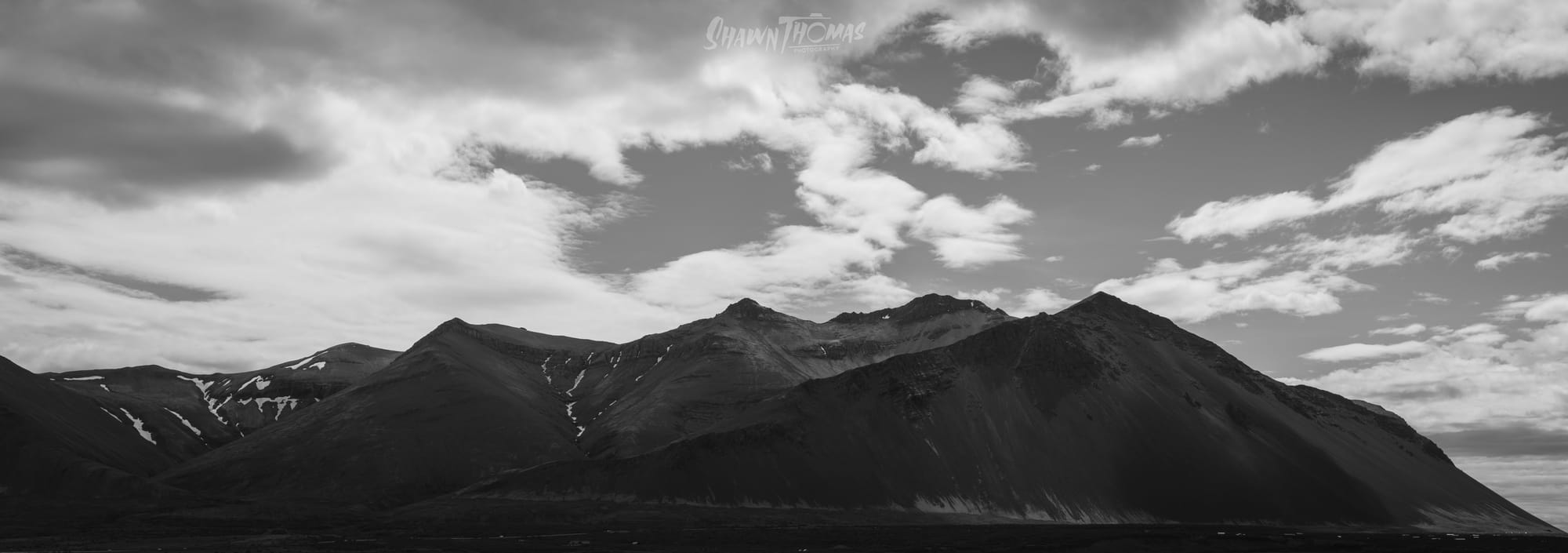
The aspect ratio dial. I want to talk about this one because it's the feature I'm going to remember from this camera regardless of how I felt about the rest of it. You can dial in a wide pano aspect right on the body and frame your shot to that crop in the viewfinder. No more guessing what's going to survive the post-crop. You see the image you're going to print. I want every camera I own to have this. It's not even close. Whoever at Fuji championed that dial, I owe them a beer.
Pano set in camera in Acros
The crop ability. 100MP gives you absurd headroom in post. A 50% crop is still 25MP, which is more than a lot of full-frame cameras shoot at full resolution. So when you can't get closer, when the composition is tighter in your head than the lens will let you go, you can crop hard later and the file holds up. That's a real flexibility win.
The built in ND. While I admit I'd like more than 4 stops, having 4 stops in body is something I find incredibly useful when out shooting, especially if it's a bright day or getting darker and you want to do a longer exposure.
And when the conditions matched, the files were stunning.
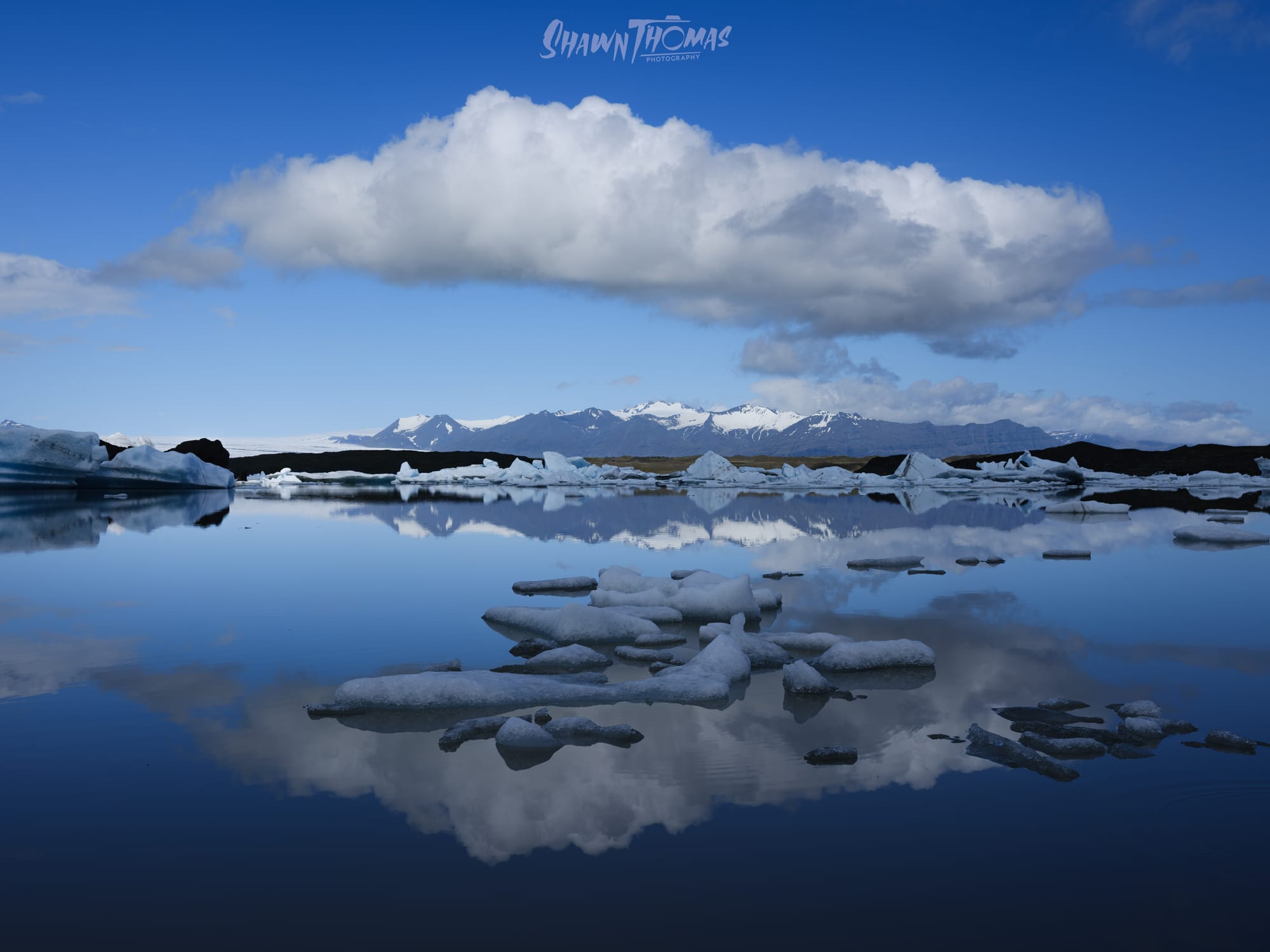
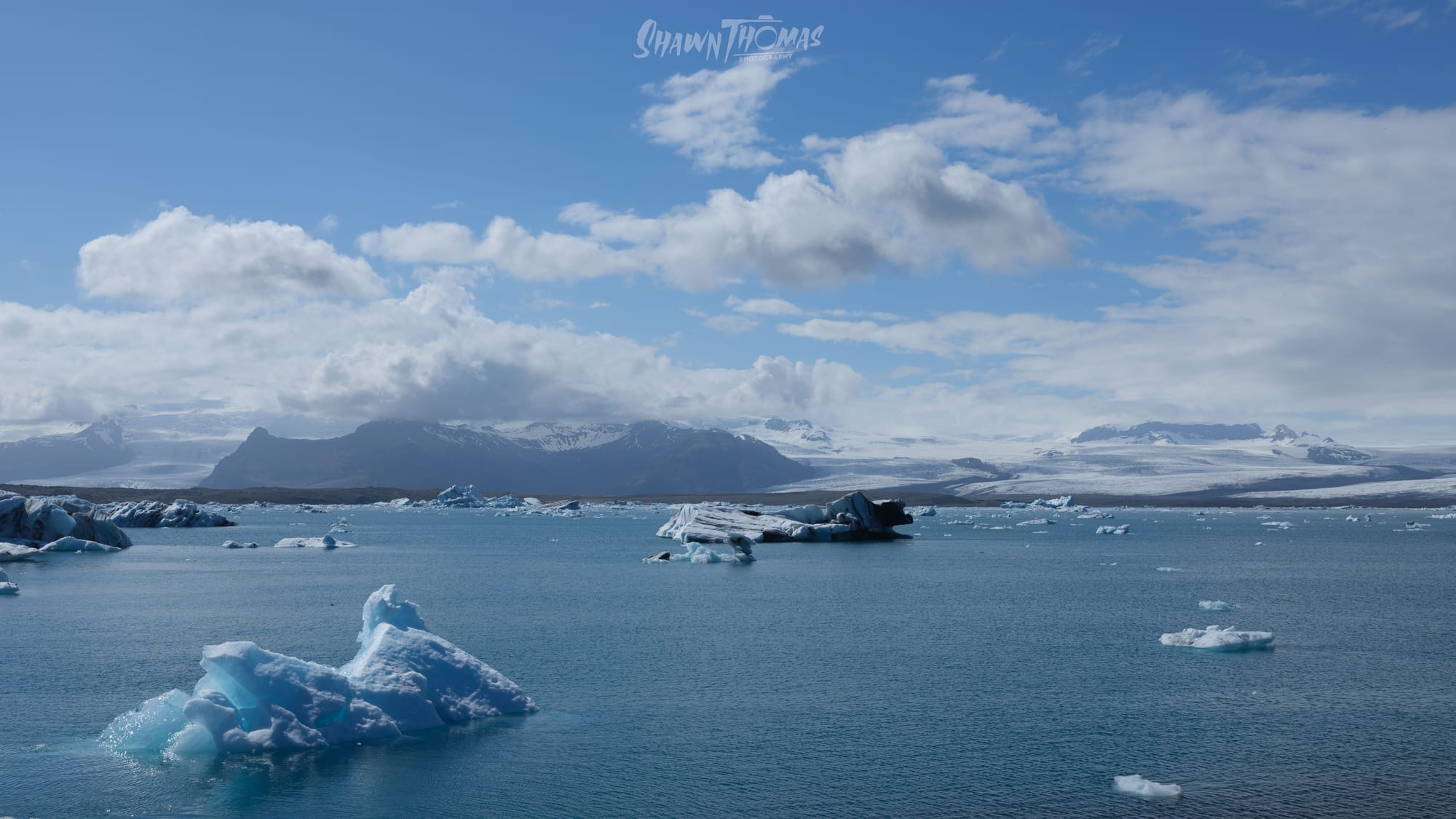
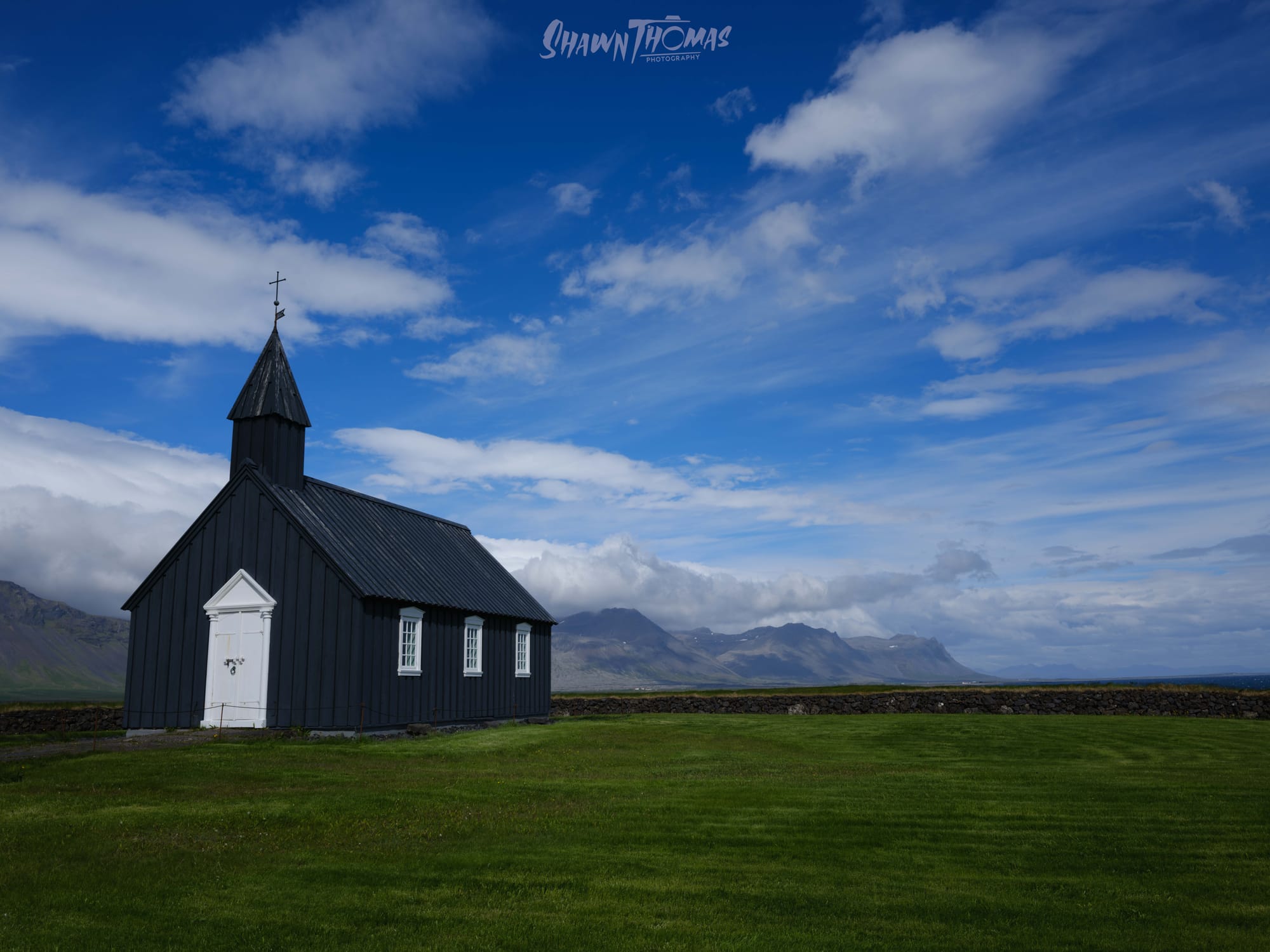
The 100MP medium format sensor at base ISO, in good light, with a static scene, produces images that are just on another level of detail and depth. Look at this one from Jökulsárlón.
The blues look so good
That's the camera doing what it's built to do. Clean sky, dominant blues, big graphic shapes, controlled light, time to compose. When you put this camera in that situation, it sings.
Where It Broke Down for Me
The Jökulsárlón shot is the camera at its best. The rest of the trip, mostly, was not that.
Here's the thing about Iceland. It isn't a daylight blue-sky country. It's a mid-light, fog-rolling, weather-shifting, golden-hour-that-lasts-three-hours country. You go for the interesting light, the in-between conditions, the atmosphere. And that's where this camera kept failing me. Not catastrophically. Not in any single moment I can point to and say that's where I lost the trip. More like a steady, low-grade frustration that built across the week, where I'd raise the GFX, take the shot, look at it later, and feel underwhelmed in a way I couldn't always articulate at first.
Once I started paying attention, the pattern was the same. Four specific issues, all of them landscape problems, all of them adding up.
No weather sealing. I'll start here because it's the most baffling. This is a $5,000 camera marketed as a compact travel piece, and you can't take it out in the rain. Iceland is rain, spray, wind, and mist. I spent a real portion of the trip not able to take the GFX cause it was raining, or we were hiking behind a waterfall, or getting drenched in some other way. Meanwhile my Z8 sat in driving rain and Skógafoss spray and didn't blink. A camera you can't take into weather isn't a landscape camera, and Iceland is not the place to pretend otherwise. They do claim that with a UV filter (provided) it becomes weather sealed and I had one on even though I hate UV filters but I'll be honest I didn't trust it.
No getting close
No IBIS. This is the one I genuinely don't understand. It's a small handheld-form-factor camera with no in-body stabilization. So if you're shooting in any kind of low light without a tripod, or trying to slow down that waterfall with the built in ND, you're at the mercy of your shutter speed. For reference, I can get sharp shots one-handed on my Nikon at 1/13 of a second. On the GFX I couldn't reliably handhold below about 1/125. That difference compounds across an entire trip. Every time the light dropped or we went to a new waterfall, I had to choose between planting a tripod or leaning awkwardly over something for the better frame and I just couldn't do that with the GFX.
The built-in ND is a nice idea, undercooked. The GFX has a built-in 4-stop ND filter, which sounds great until you do real landscape work and realize 4 stops isn't enough for the long exposures you actually want. You can stack it with an external ND, but at that point you've defeated the point. And you can't deploy it on the fly without going into the menu, so it isn't useful for spontaneous shooting.
28mm equivalent, fixed. I don't love 28mm in general, I've written about that before. It's not wide enough to do dramatic wide-angle work, and it's not tight enough to compress and isolate. The aspect ratio dial helps a little by letting you crop to pano in-camera, but a crop is not the same as a focal length. You're stuck with the lens, in a place where you really want options.
Wanted to be closer but was on a cliff
None of these alone would sink the camera. Taken together, they kept pushing me back toward the Nikon. Every time I picked up the GFX and the conditions weren't perfectly aligned with what it does well, I felt the limitations in my hands. And the conditions in Iceland are almost never perfectly aligned. That's the whole point of going. But that all takes us to my biggest issue, the one I can't live with.
The Color Problem
This is probably the most subjective section but in my opinion there's something wrong with the colors, and Im extremely picky about my colors. I wasnt the only one on the trip who felt that, others I was with looked at the output and thought the same thing. I had a hard time naming it for the first few days of the trip, because the camera can render beautifully when the conditions cooperate. The Jökulsárlón shot earlier in this post is proof of that. But by the middle of the week I'd noticed the pattern, and once I noticed it I couldn't unsee it.
When the color was predominantly blue, the camera blew me away. Anything with nuance, it fell apart.
The blues look so good
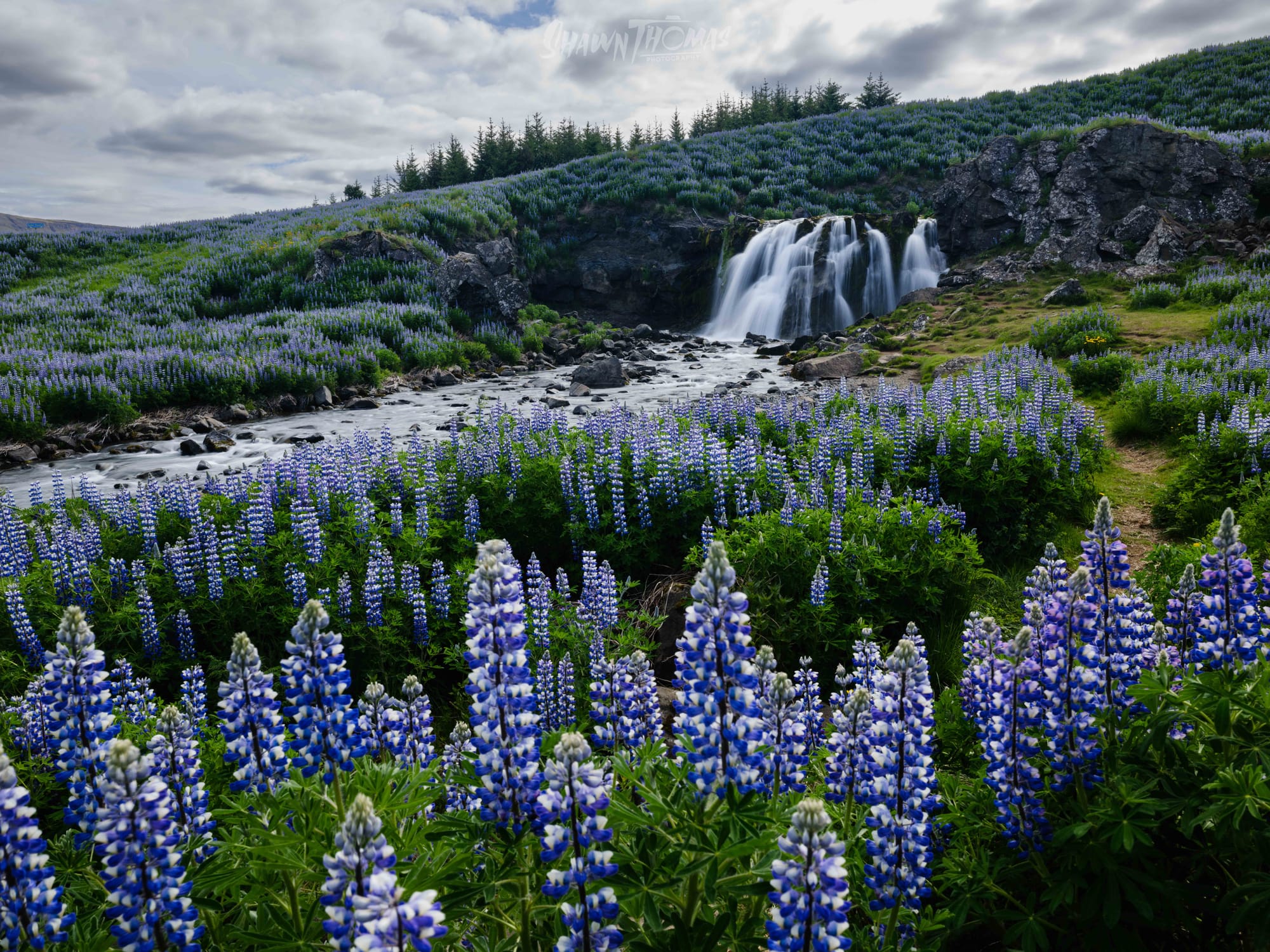
That's the cleanest way I can describe it. Big graphic scenes with dominant single hues, deep blues, cold whites, clean skies, hard mountain shapes, the camera nailed. It rendered those with a depth and a presence that you can absolutely see in the glacier shots. But the moment a scene asked for tonal transition, the moment it lived in the warm earth tones or the mid-light greens or the subtle gradients between purple and green, the camera flattened. It seems to favor blue-green and almost has a bit of a cast I had an extremely hard time taking out later.
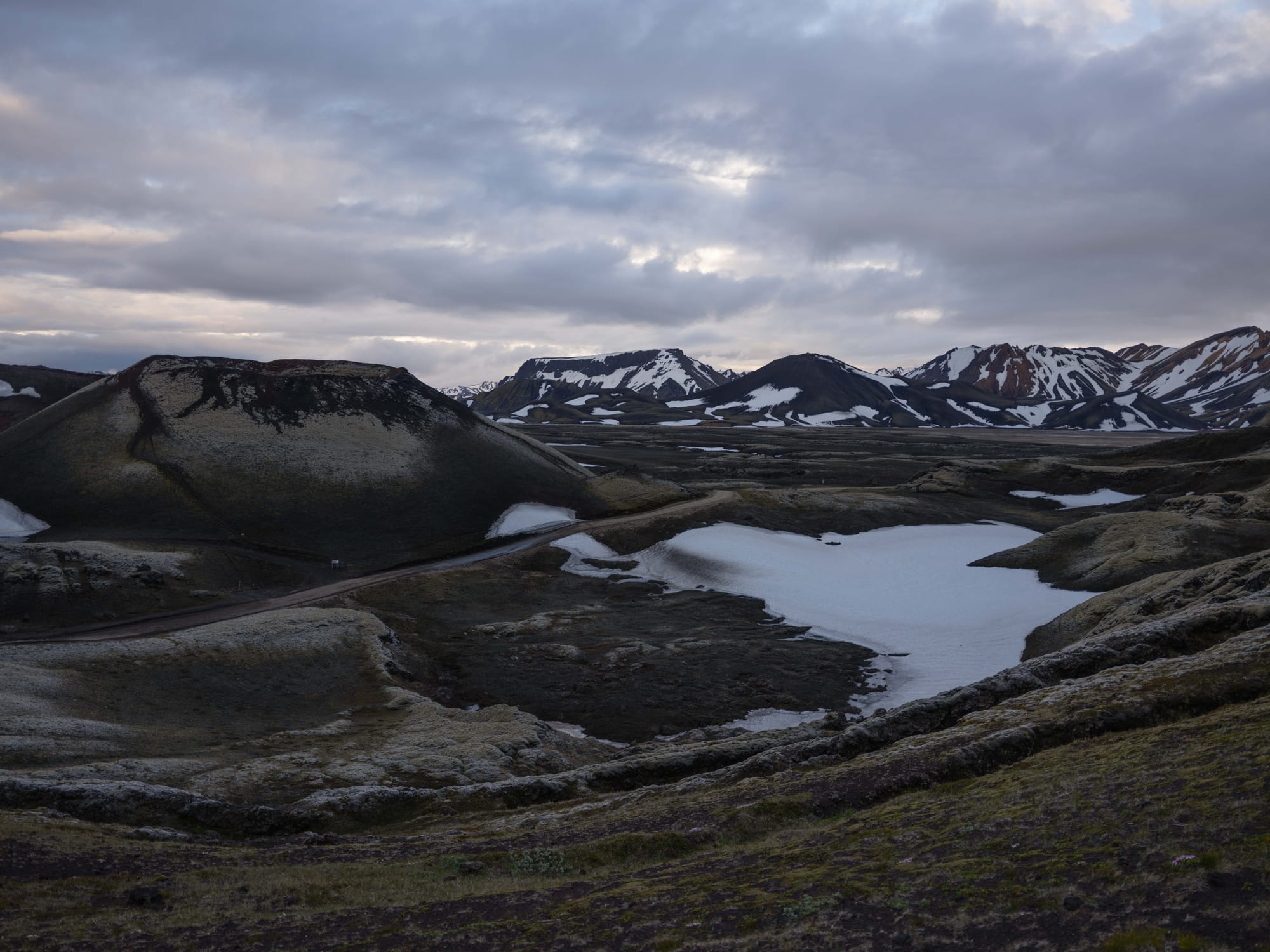
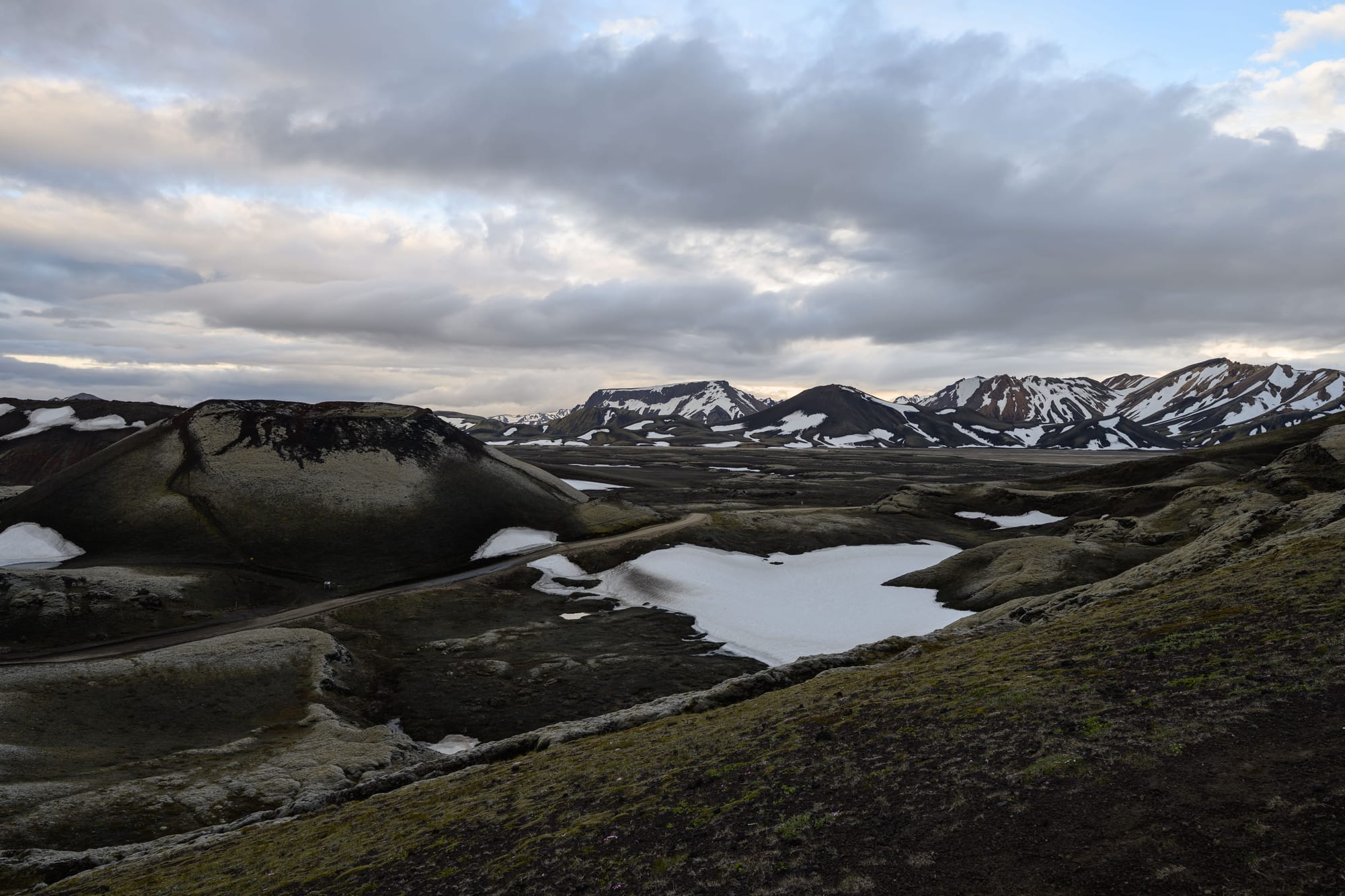
Fuji on the Left Nikon on the Right
Heres the only close to side by side I have to show it, both these files have incredibly minimal editing, a little shadow and highlight adjustment and I'm in Provia standard on the Fuji. You can see how grey and dull and blue/green casted the Fuji is. For a camera I was so excited to use because of 16 bit color depth and what they might bring to an image I was so disappointed to a point I really didn't enjoy shooting it and the files need so so much work.
Iceland is a nuance country. Theres so much graphic color there, and I honestly expected shooting a 16 bit color capable camera to be blown away by the transitions but I wasn't. Another thing I was really surprised by because the X100VI has in my opinion amazing colors, but the film sims on the GFX just were not working for me, when I shot people they leaned green, or blue, with a bit of a cast I did not like and unless the scene was predominantly blue I tended to go home pretty unhappy.
The Pattern Underneath
If you've been reading carefully, the pattern is already on the page. Every win is about composition. The size lets you carry the camera to the scene. The aspect ratio dial lets you see the composition. The crop ability lets you refine the composition. Every loss is about capture. No weather sealing means you can't be in the conditions where the interesting light happens. No IBIS means you can't handhold when the light drops. Limited ND means you can't extend exposure when the scene calls for it. The color rendering breaks down when the scene asks for nuance instead of bold.
This camera is built to compose. I just don't like the way it captures.
So Who Is This For?
I tested this camera as a landscape camera, and you've now read why I think it isn't one, at least not for the kind of landscape work I do or the kind of place Iceland actually is. So who is it for? I'm going to speculate here, because I didn't test these use cases, but the specs and a week of handling tell me enough to make some educated guesses.
It isn't a portrait camera. f/4 at 28mm equivalent is too slow and too wide for flattering portrait work, and the nuance problem I described in the color section would hurt skin tones specifically, which are all tonal transition. You'd be fighting the camera in post for results a less expensive option would hand you for free. I know, I tried with my daughter.
It isn't a street camera. No IBIS, slow lens, and a body that's small for medium format but still larger than the dedicated street options. The aspect ratio dial would be a joy on the street, but the rest of the camera fights you. You'd be better off with an X100VI for a fraction of the price.
It isn't a low light or astro camera. We covered why.
If I had to make a case for who would love this camera, I'm not sure. I know there are people who love it, and it is a great little piece of kit, I just can't figure out what it wants to be and it definitely doesnt work for my workflow. If I was going medium format I think Hasselblad would be the way for me if for no other reason the color which was the part that bothered me the most.
Every review I watched of the GFX100RF before this trip compared it to the Leica Q3, and that comparison never made sense to me, even before I shot the GFX. They're functionally different cameras. But I've shot both. I used to own a Q3 and sold it for specific reasons I've written about elsewhere, and even with those reasons, for every use case I can think of I'd take the Q3 ten times out of ten over the GFX100RF.
And for half the price and twice the joy, I'd just stick with my X100VI.