A day at Ingólfshöfði, Iceland's best puffin colony, with a guide who cares about the birds first. Puffins by the thousands, great skuas overhead, and an arctic fox on the black sand as a parting gift. Book with Einar. Bring a long lens. Everything you get is a gift.
If you go to Iceland and you care about puffins, this is where you go. Full stop.
I've been chasing puffins for two years now. My first trip out to try for them ended in fog and disappointment, and I wrote a whole essay about it because it was one of the more formative days of my photography life. So when the south coast trip lined up with a stop at Ingólfshöfði, I was maybe a little more excited than I let on. Second chance and all that.
Ingólfshöfði is a promontory, essentially a small headland, that sits along the south coast of Iceland. You get there in a tractor-pulled hay wagon across a tidal flat, which is a whole experience of its own that I'll leave for you to discover. Once you're up on the headland, you're on a working puffin colony, plus a nesting site for great skuas, plus a whole ecosystem that Icelanders have been quietly protecting for a very long time.
The tour is run by Einar and his family through the Ingólfshöfði Puffin Tour operation, and I want to talk about him first, because he's the reason this place is worth writing a whole blog post about.
Einar, and Why It Matters Who Runs the Tour
I've written before about being a guest in the wild, and how much I care about the ethics of wildlife photography. It's not a small thing to me. I'm always a little on edge when I visit any kind of guided wildlife site because sometimes what you find is a person running a business first and caring about the animals second. That's not what you find here.
Einar is a photographer himself, and you can tell within about five minutes of meeting him that the birds come first. Then the birds. Then the birds again. Then, way down the list, the tour. He'll tell you where to stand. He'll tell you where not to stand. He'll gently redirect you if you're getting too close, and he'll do it in a way that makes you feel like you learned something, not like you got scolded. He knows the colony. He knows which burrows are active, which ledges are new, which birds have been coming back for years. He talks about them the way you'd talk about neighbors.
The whole ethos of the tour tracks with that. You get to a distance from the puffins where you can actually work, close enough for real images, far enough that the birds don't care that you're there. That balance is really hard to get right, and most places err in one direction or the other. This place gets it right. I never once felt like I was making a bird uncomfortable, and that means I never once had to make the choice between the shot and the animal, which is the choice I hate having to make.
If you go to Iceland and you want puffins, this is who you go with. I can't be clearer about it. Book this tour.
The Puffins
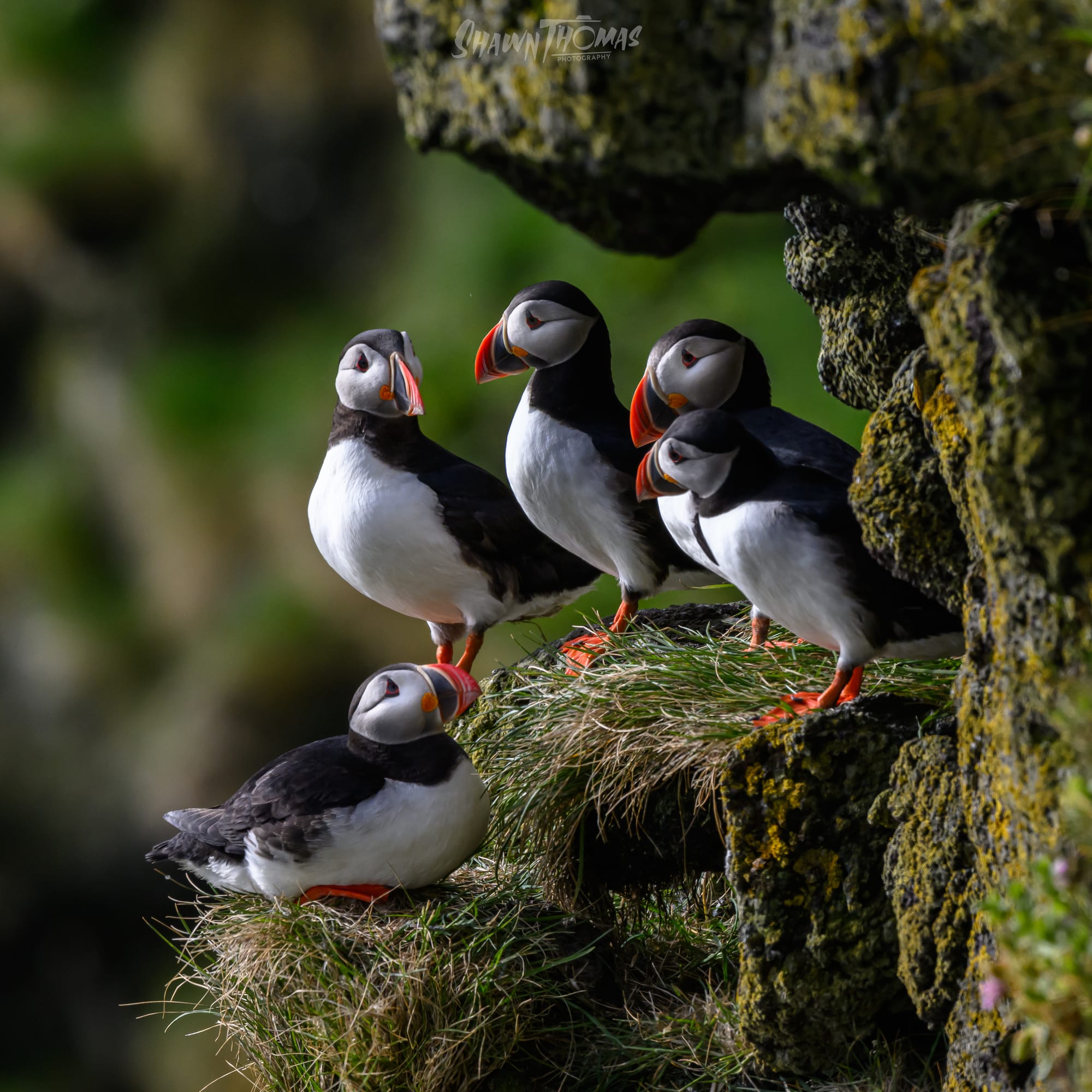
Having a meeting
Okay let's talk about the birds themselves, because they're one of the main reasons I flew across an ocean.
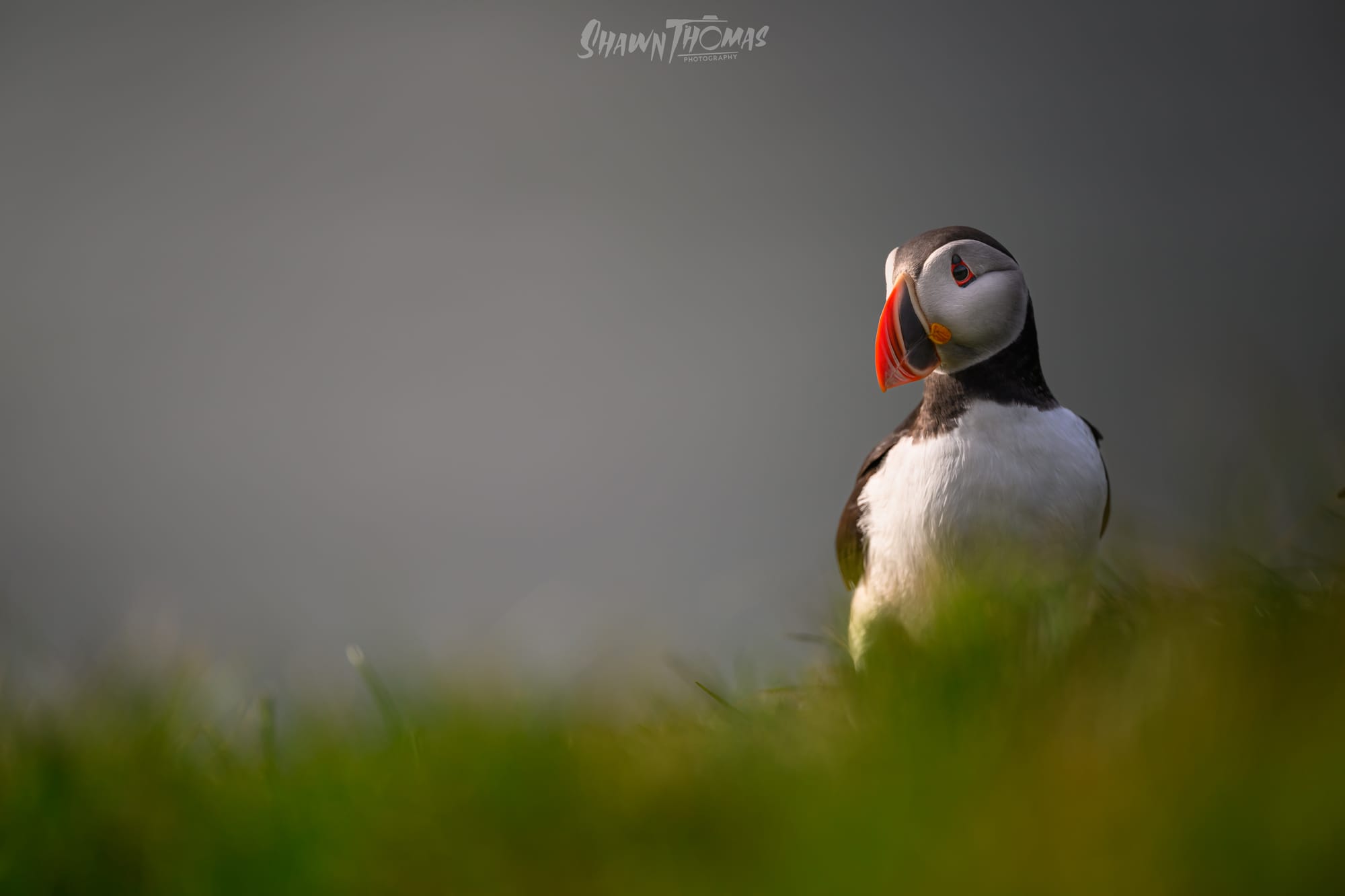
Atlantic puffins are one of those species that photograph like a cartoon. The face is symmetrical, the beak is high contrast, the eye has a strong personality. They're small, about the size of a cornish hen, and they nest in cliff-side burrows that they dig themselves. In summer they're at the colony to breed and raise pufflings. They come and go on fishing runs, disappearing out to sea for hours and coming back with beaks full of sand eels.
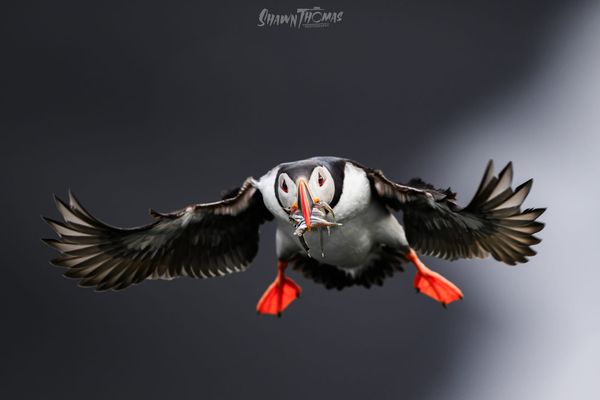
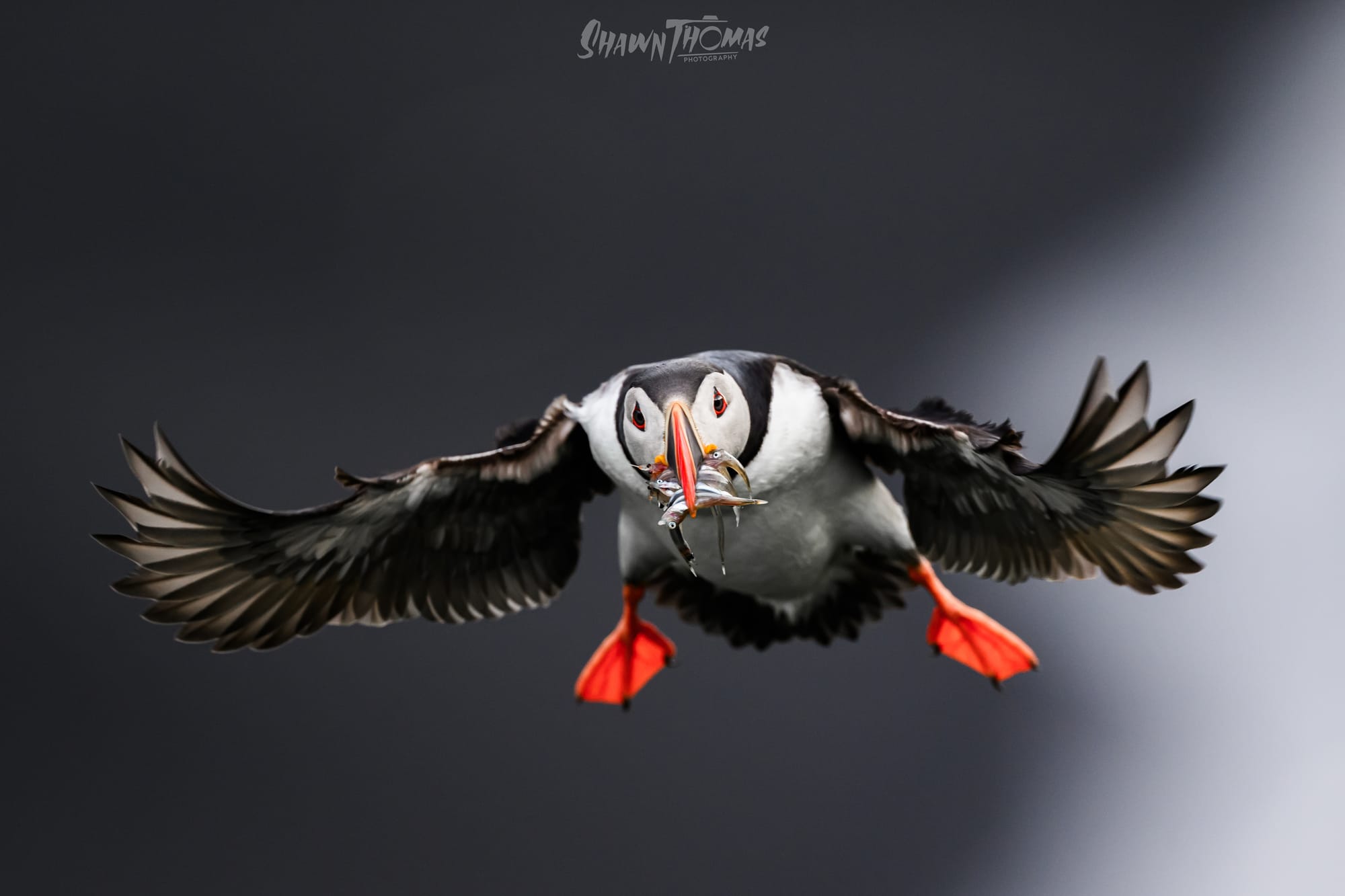
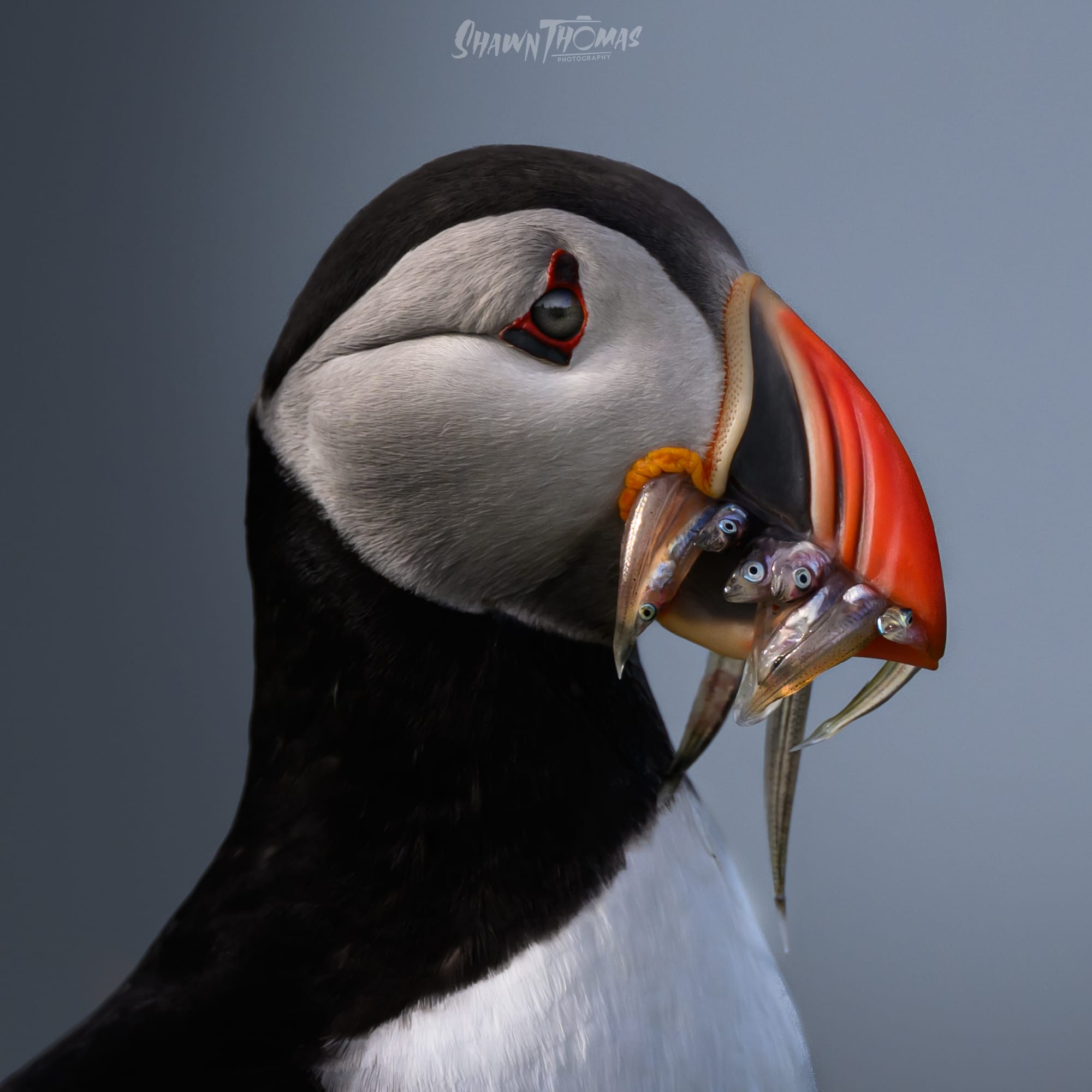
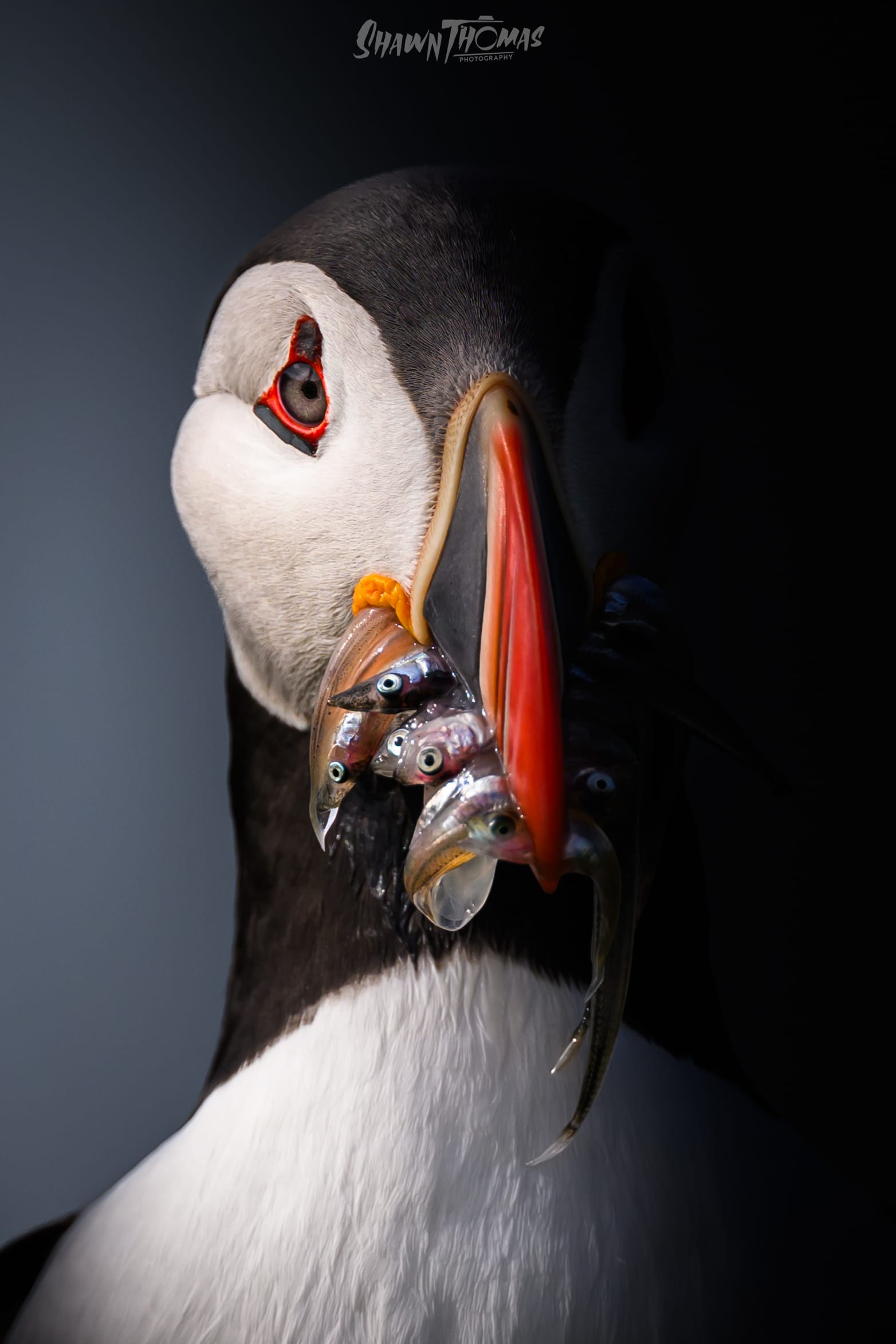
That fishing behavior is the thing you want to catch. A puffin returning to the colony with a beak full of shining silver fish is the puffin shot, and it's what I spent most of my time trying to get.
Coming in hot with dinnerA closer look at the catch. Sand eels, mostly
Here's a thing that's not obvious until you're actually there. Puffins don't just land smoothly on the cliff. They come in like little missiles, wings flared, feet forward, aiming for a landing spot that is not always where they end up. It's genuinely hilarious. Half the puffins overshoot their burrows, tumble across the grass, and have to walk back looking annoyed. The other half make perfect landings and immediately get harassed by other puffins who want the fish.
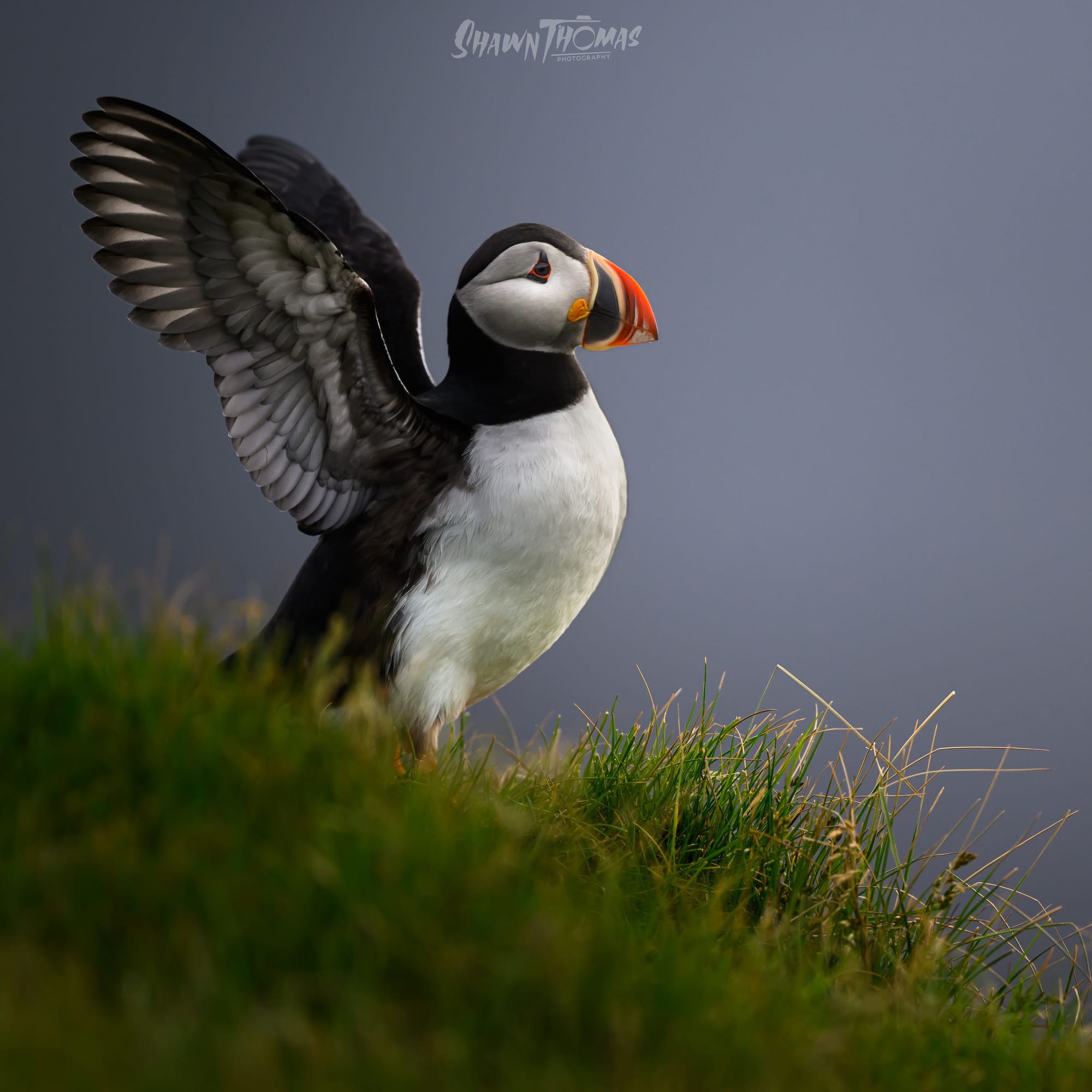
Wings out, showing off
Another thing worth knowing, and this is where Einar's knowledge really pays off, puffins are creatures of habit. Same burrows, same landing spots, same flight paths. If you sit for a few minutes and just watch, you can see the patterns. Certain spots get used every few minutes. Others sit empty for an hour. Einar will point you toward the active ones without a lot of fuss.
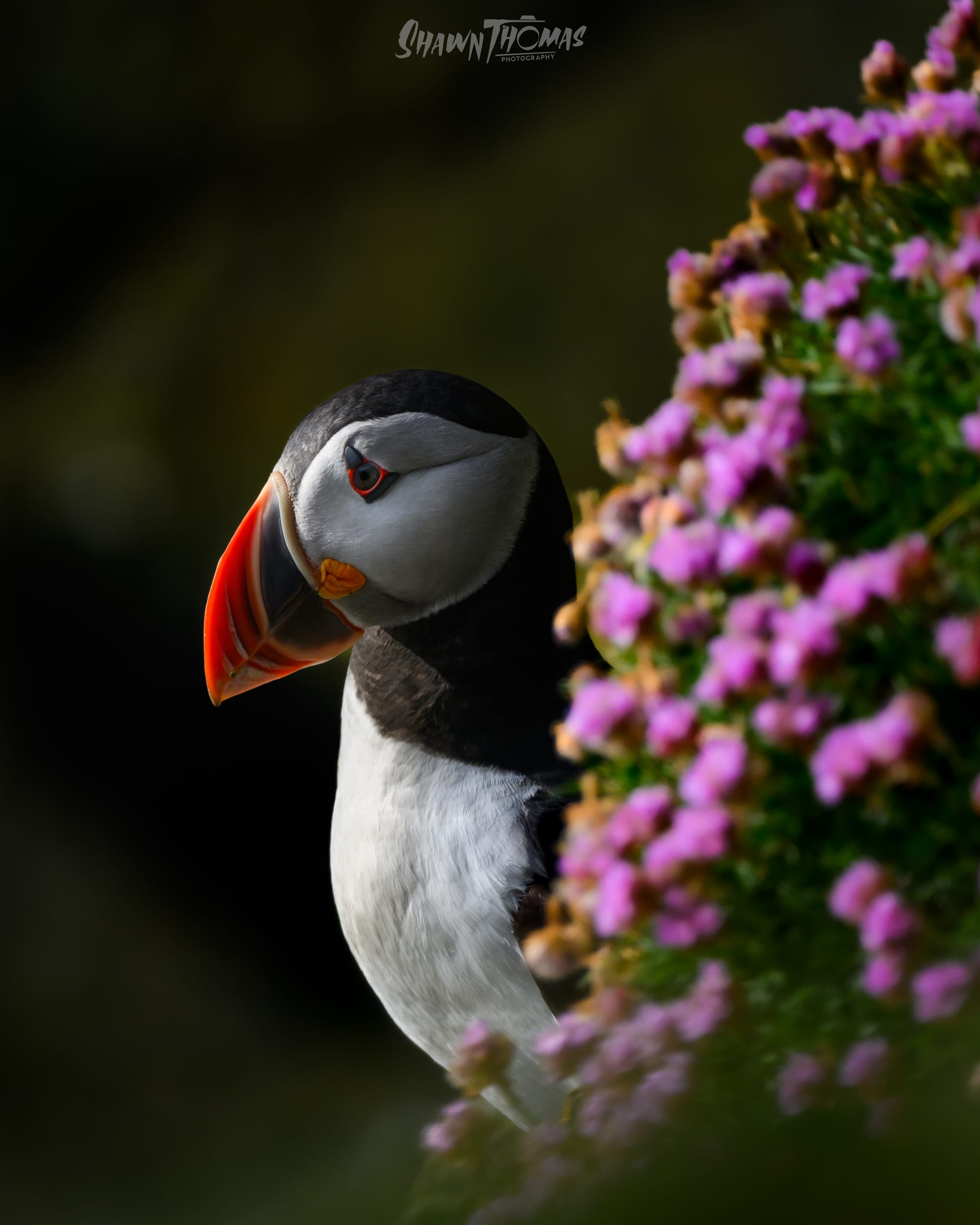
Peeking around the sea thrift
The sea thrift, the pink flowers, are worth mentioning too. In early summer they're everywhere on the cliffs, and if you can get a puffin next to a patch of them, you've got a beautiful frame. Iceland gives you a lot of gifts. This is one of them.
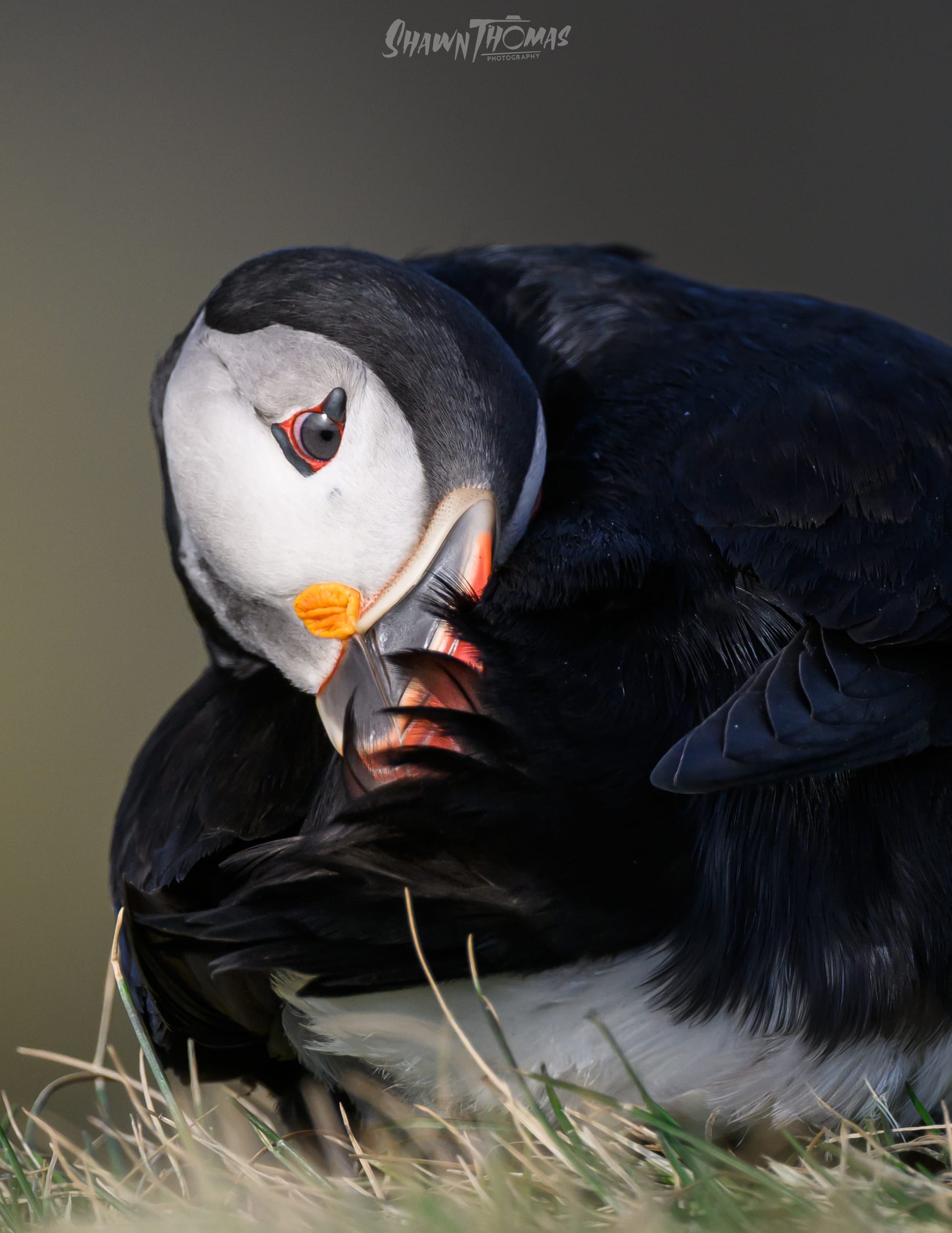
Preening. The colors on the beak are only there in breeding season, they slough off in winter
The eye is the thing I always chase in bird portraits, and puffin eyes are unfairly good. Red-rimmed, sharp, expressive. They also blink with a nictitating membrane, so if you catch them mid-blink you get a completely different look. I got at least one preen frame that I love, above.
Across the cliffsHow many ways can you photograph a puffin?
The Great Skua
Ingólfshöfði isn't just puffins. It's also home to a nesting population of great skuas, which are, and I say this with love, absolute units of birds.
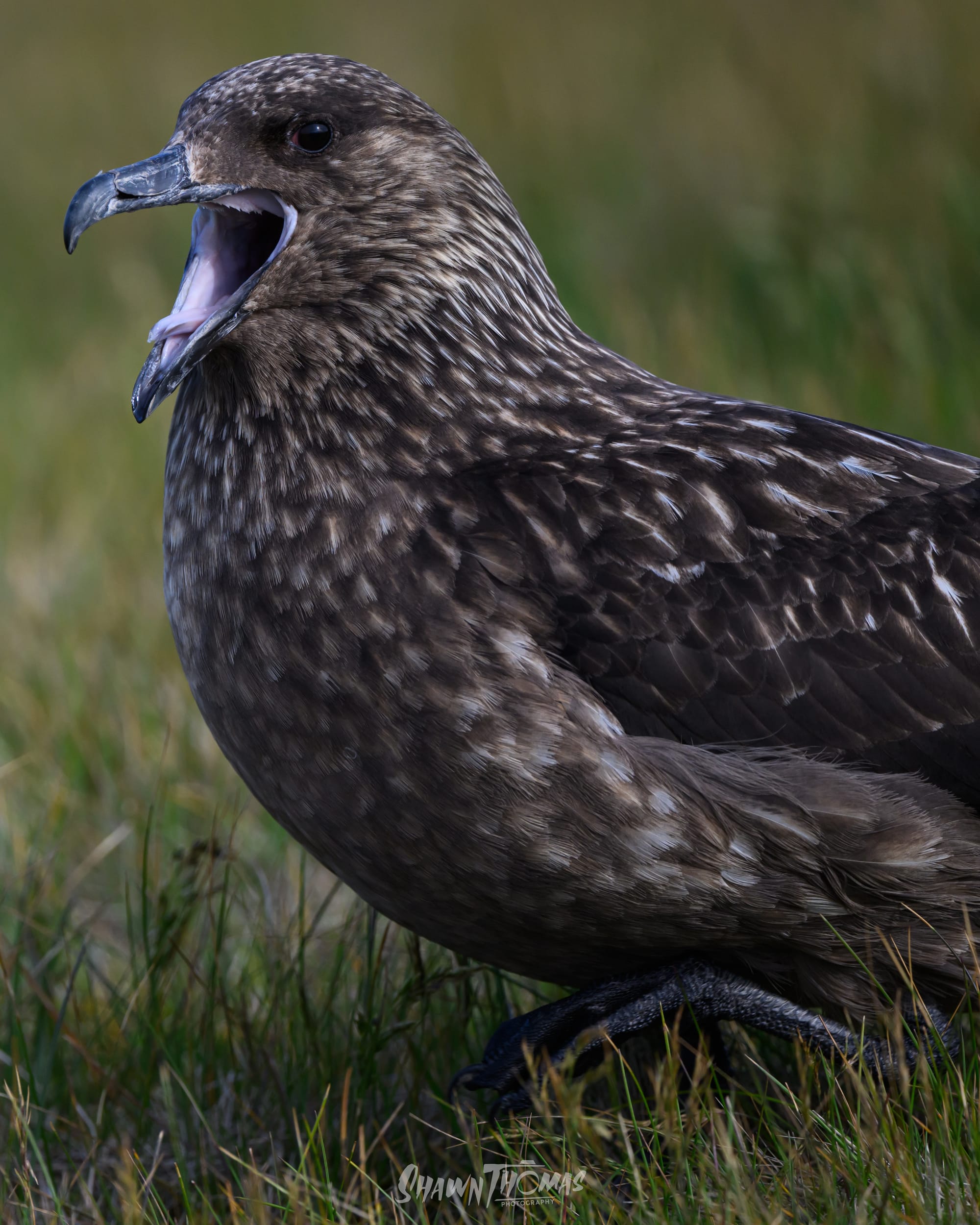
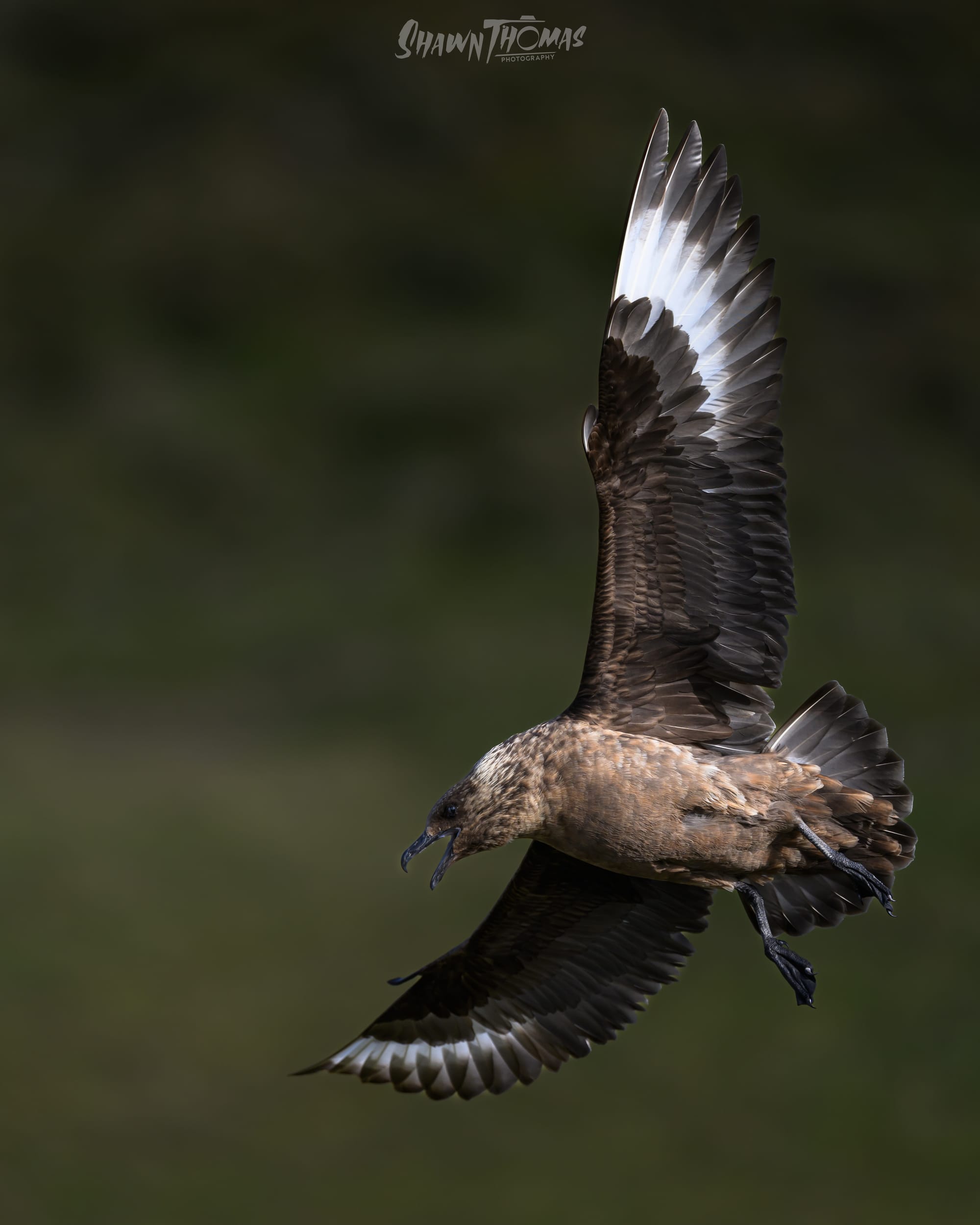
Making sure I hear about it
Great skuas are large, aggressive seabirds. They're built like a hawk crossed with a gull, and they make their living partly by fishing and partly by stealing from other birds, including puffins. On Ingólfshöfði they nest on the flat top of the headland, and if you stray too close to a nest they will absolutely dive-bomb you. Which is why you don't stray too close to a nest. Einar knows where they are and keeps the tour close enough to get photos but not enough to over bother them.
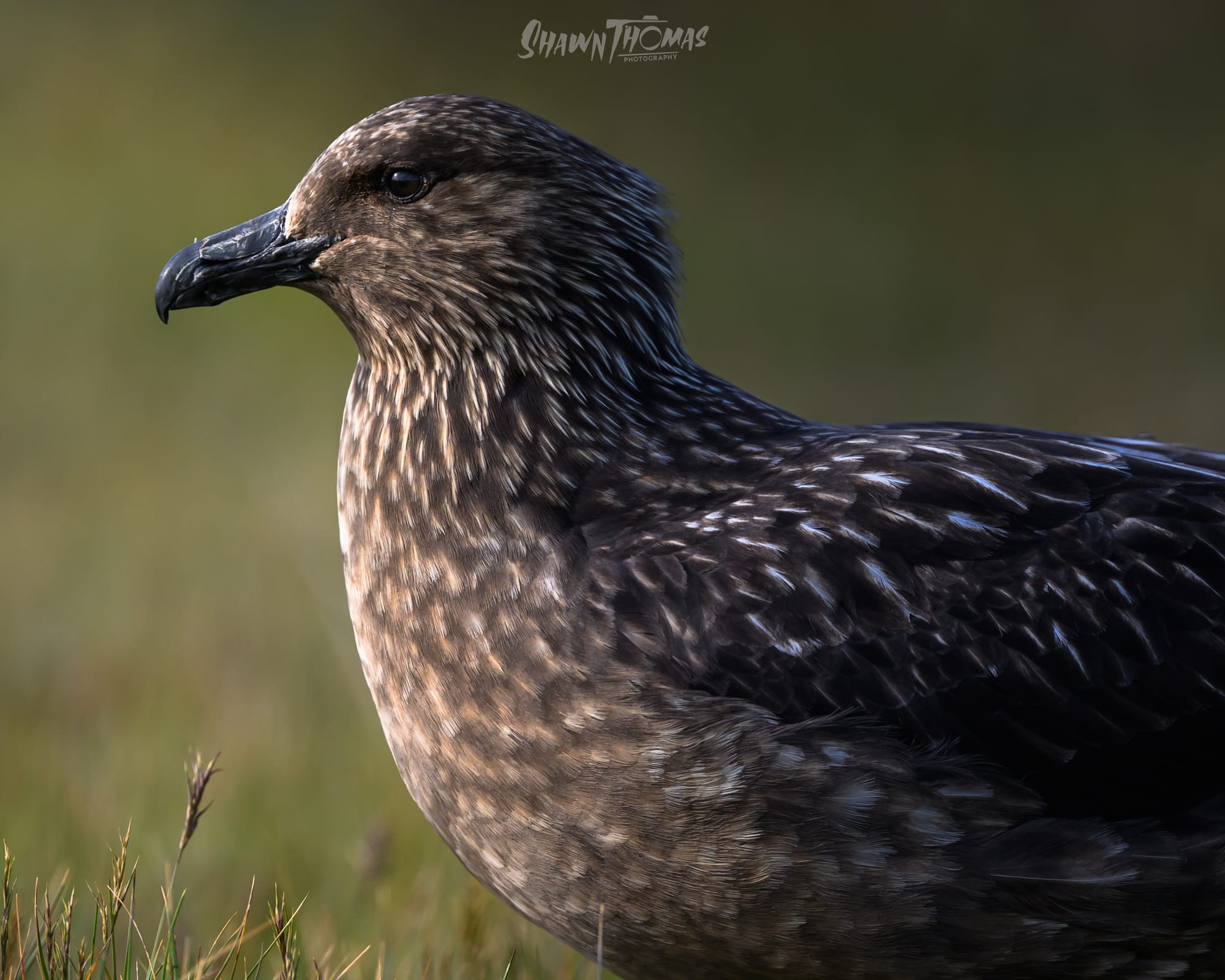
They photograph beautifully because they're both dramatic and subtle. The plumage is mostly brown, but up close there's white speckling, warm feather detail, a bit of iridescence in the wings when the light catches right. And when they open their mouths to call, the inside is this pale pink that's a genuine surprise the first time you see it.
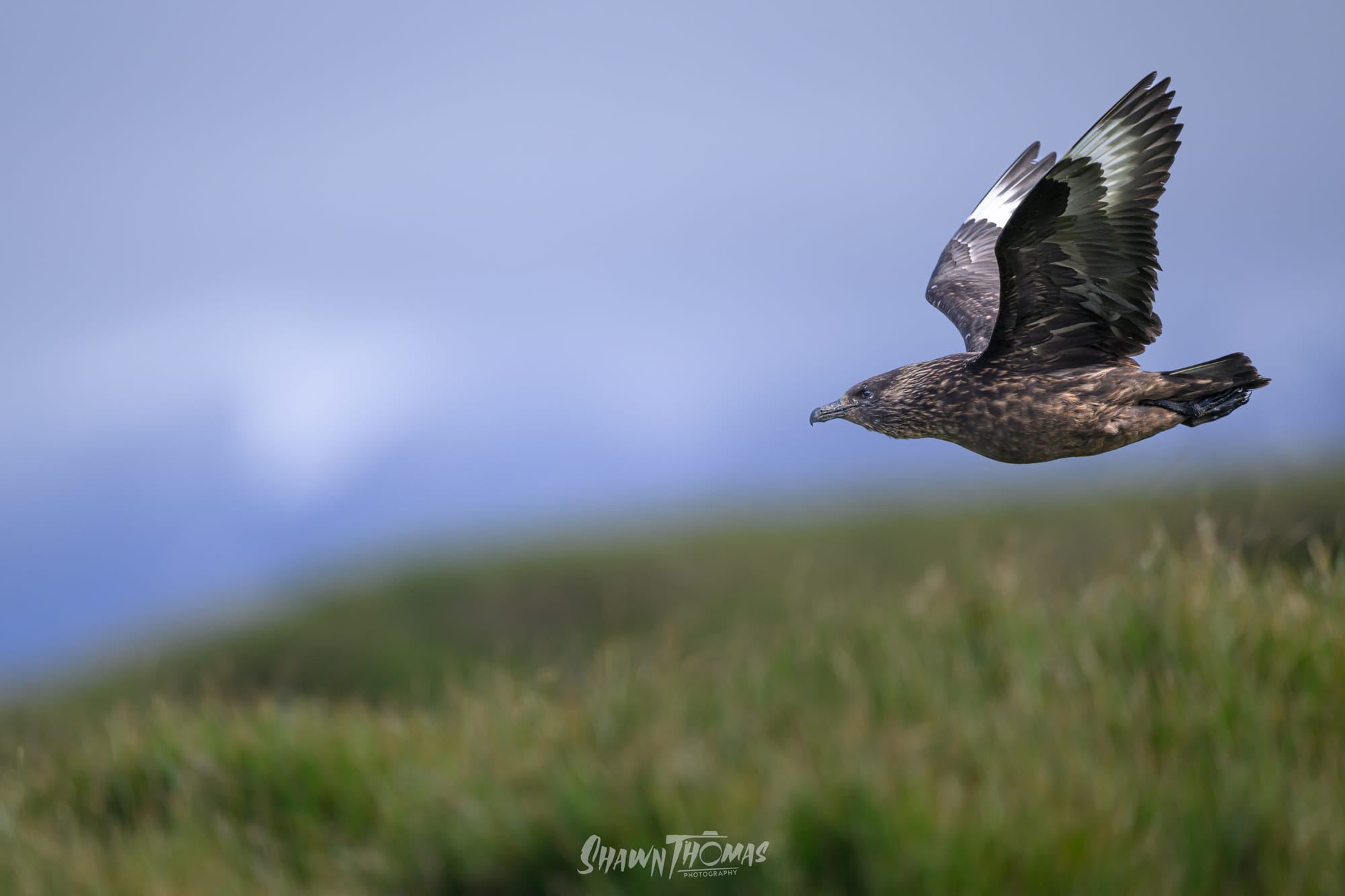
Portrait. Just look at that feather detailLook at that thing fly
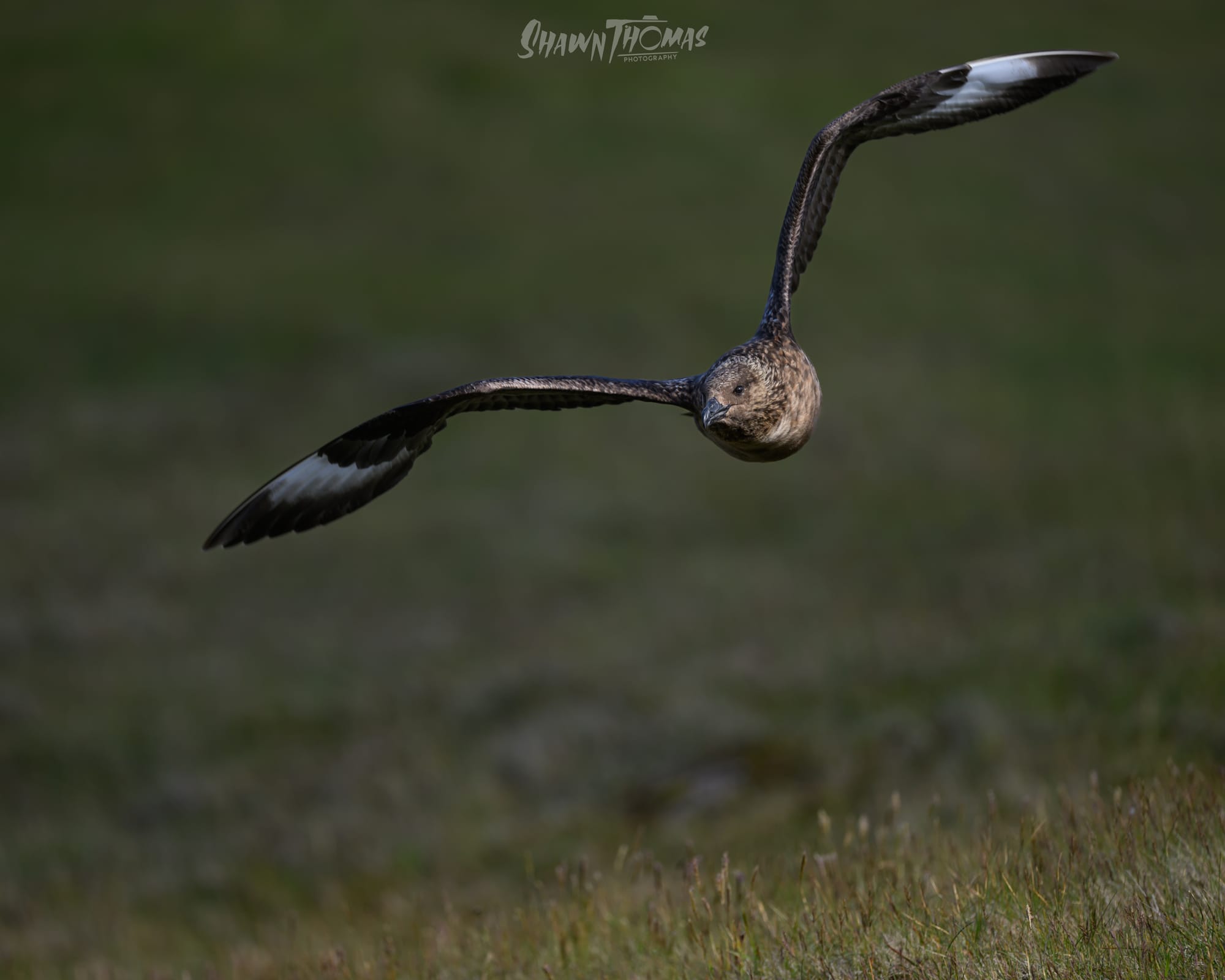
Watching a skua fly is worth the whole trip on its own. They're bigger than they look, and when they bank overhead the wingspan is startling.
Across the capeAnd banking away
I probably shot the skuas almost as much as I shot the puffins, honestly. They're a less obvious subject and I found myself more drawn to them the longer I sat with them. Which is the thing about wildlife photography I keep learning, the animal you didn't come for is often the one that surprises you.
And Then. The Fox.
Here's where the day tipped from great to magical.
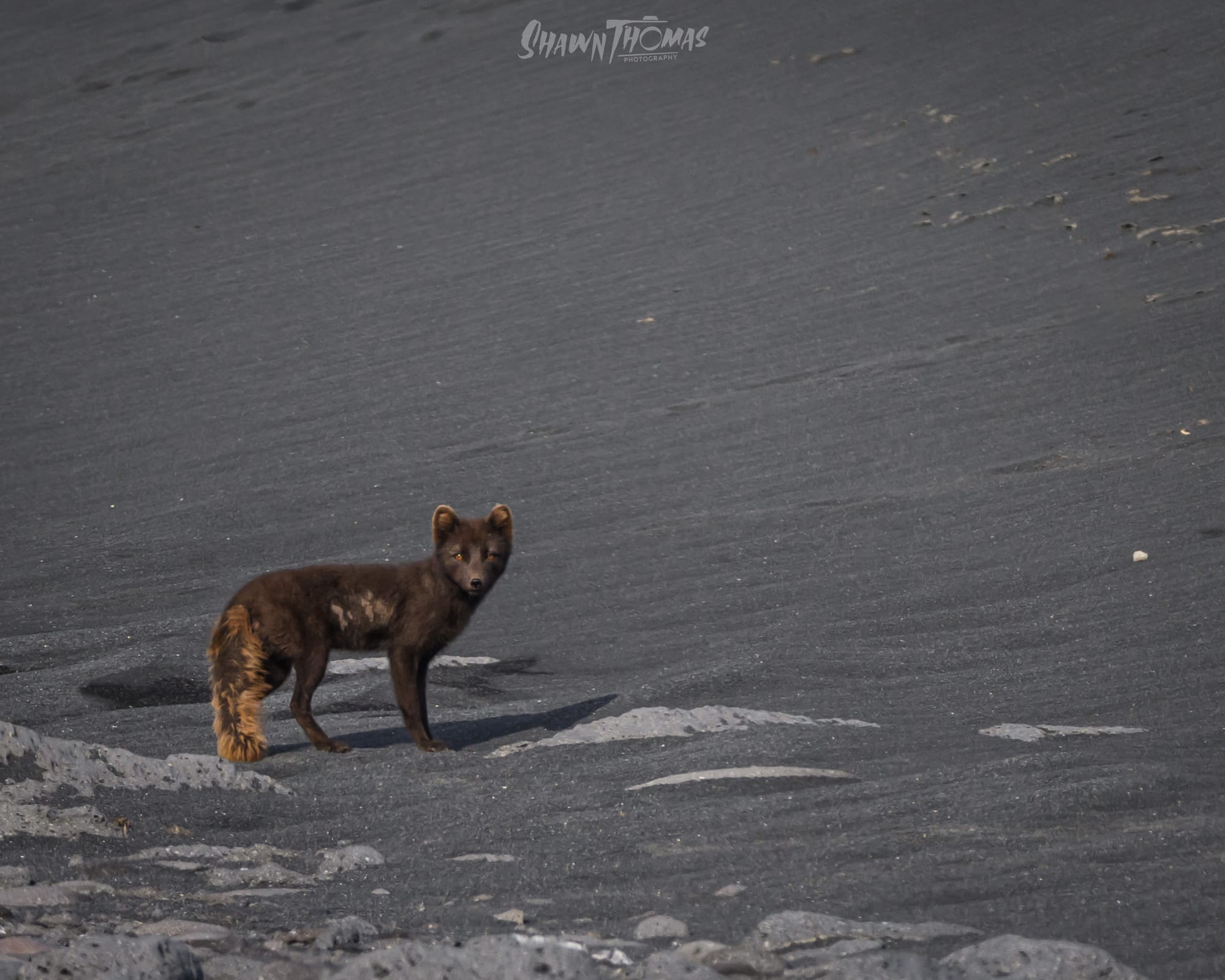
On the way back from the headland, we spotted a shape moving across the black sand flats. An arctic fox, mid-molt, still holding some of its summer coat, moving at that unhurried trot that foxes do when they know they aren't in a hurry.
Arctic fox, black sand, no plan
Arctic foxes are Iceland's only native land mammal. They've been on this island since the last ice age. They're small, adaptable, and mostly nocturnal, which means seeing one in the middle of the day, out in the open, on the black sand, is not something you plan for. It just happens, or it doesn't.
It was too far out for a great photo, but this was an experience all on its own and worth every second of it, I never dreamed I would see an arctic fox.
That was still the moment the day tipped from a good tour into something I'll remember for a long time. Not because the fox was the biggest or the closest wildlife encounter of the trip, but because it was the unearned one. The puffins we came for. The skuas we knew about. The fox was a gift.
Which, if you've read any of what I've written before, you know is the framing I try to hold about all of this. You are not owed an image. Everything you get is a gift. And every once in a while a place hands you one you didn't even know to ask for.
Go
If you're going to Iceland and you care about wildlife, go to Ingólfshöfði. Book with Einar. Bring a long lens (I mostly shot the 600mm for the birds and the 70-200 for wider frames). Bring rain gear even if the forecast says clear. Bring patience, because the light and the birds move on their own schedules and neither of them cares about yours.
And go with a photographer running the tour who cares about the birds first. It matters. It matters for the birds, and it matters for the kind of images you come home with. Nothing feels good about a shot you got by pushing an animal. Everything feels good about a shot you got because the animal chose to let you have it.
Ingólfshöfði is that kind of place. Einar is that kind of guide. And once in a while, they even throw in a fox.