Nikon Z 70-200 f/2.8 V1: A Landscape Review, and Why I Skipped the V2
A landscape review of the Nikon Z 70-200 f/2.8 V1 from a wildlife photographer who took it across Iceland and used it more than the 14-24. Why compression thinks like wildlife, why the V1 still wins, and why I'm not upgrading to the V2.
Let's get the weird part out of the way first. This is a review of the V1 of Nikon's Z 70-200 f/2.8, and no, that isn't a typo. The V2 exists. It's newer. It probably focuses a hair faster and has some incremental improvements. And I'm not buying it.
Here's why. When Nikon released the original Z 2.8 zoom trinity, the 14-24, the 24-70, and the 70-200, they did something quietly brilliant. All three lenses share the same oversized lens hood system that comes with the 14-24. That hood takes 112mm filters. Which means if you own the 14-24 and a set of 112mm filters, and I do, you can slap that same hood, and those same filters, on the 24-70 and the 70-200 as well. One filter set. One hood. No step-up rings. No adapters. No swapping filter systems mid-shoot when you change lenses.
For a landscape photographer, that is a massive deal. Filters are expensive, bulky, and easy to lose. A unified filter system across your three main zooms is the kind of thing that only matters if you actually travel and shoot in the field, which is exactly when it matters most. Nikon shipped an entire zoom trinity that worked together as a system.
And then, quietly, they broke it. The V2 versions no longer share that hood system. You'd need a whole new filter setup to move forward. So I'm not moving forward. I've got the V1, the filters work, the system works, and I'm going to keep using it until Nikon gives me a reason that's more compelling than "the autofocus is 3% faster."
That's the nerdy answer to "why the V1." But the more interesting answer, the one that's actually the point of this post, is why I love shooting landscapes with a 70-200 at all.
A Wildlife Photographer Walks Into a Landscape
Most landscape photographers reach for wide. The 14-24, the 16-35, the ultra-wide primes. And I get it. The tradition of landscape photography is embracing the scene, showing the vastness, letting the sky do its work. That's what wide is for.
I'm not most landscape photographers, hell I'm barely a landscape photographer. I'm a wildlife photographer who also shoots landscape, and my eye was trained by pointing 600mm at birds. When I look at a scene, my instinct is not "how do I get all of this in." My instinct is "what is the one thing in this scene, and how do I isolate it from everything else."
That is the exact skill a 70-200 rewards.
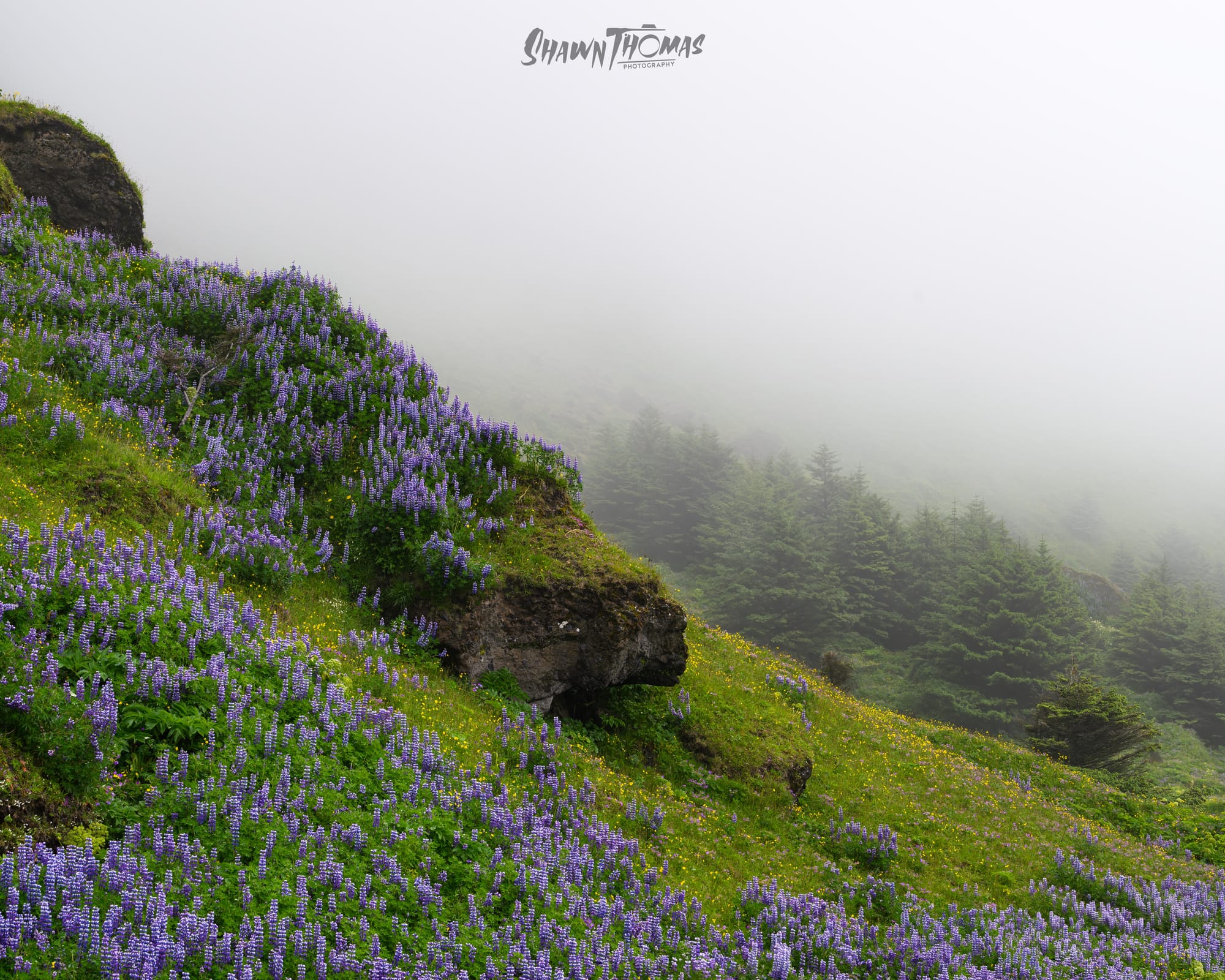
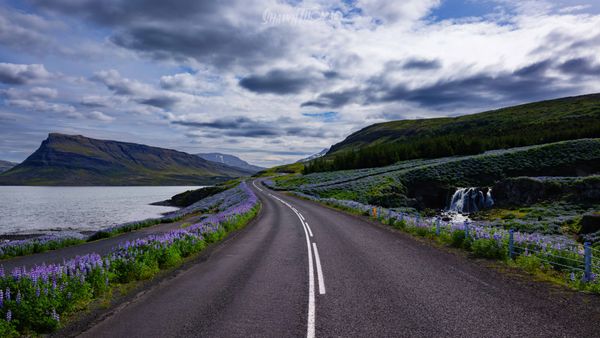
A hillside of lupines disappearing into fog. Wide, this scene doesn't exist. It needs the compression to feel closed in.
The 70-200 does two things a wide lens can't. It compresses, meaning it flattens perspective and pulls background elements forward, and it isolates, meaning it lets you separate a subject from its surroundings using both framing and depth of field. Both of those are wildlife-photographer instincts applied to landscape work, and Iceland is a place where they pay off constantly.
What It Did for Me in Iceland
Let me show you rather than tell you.
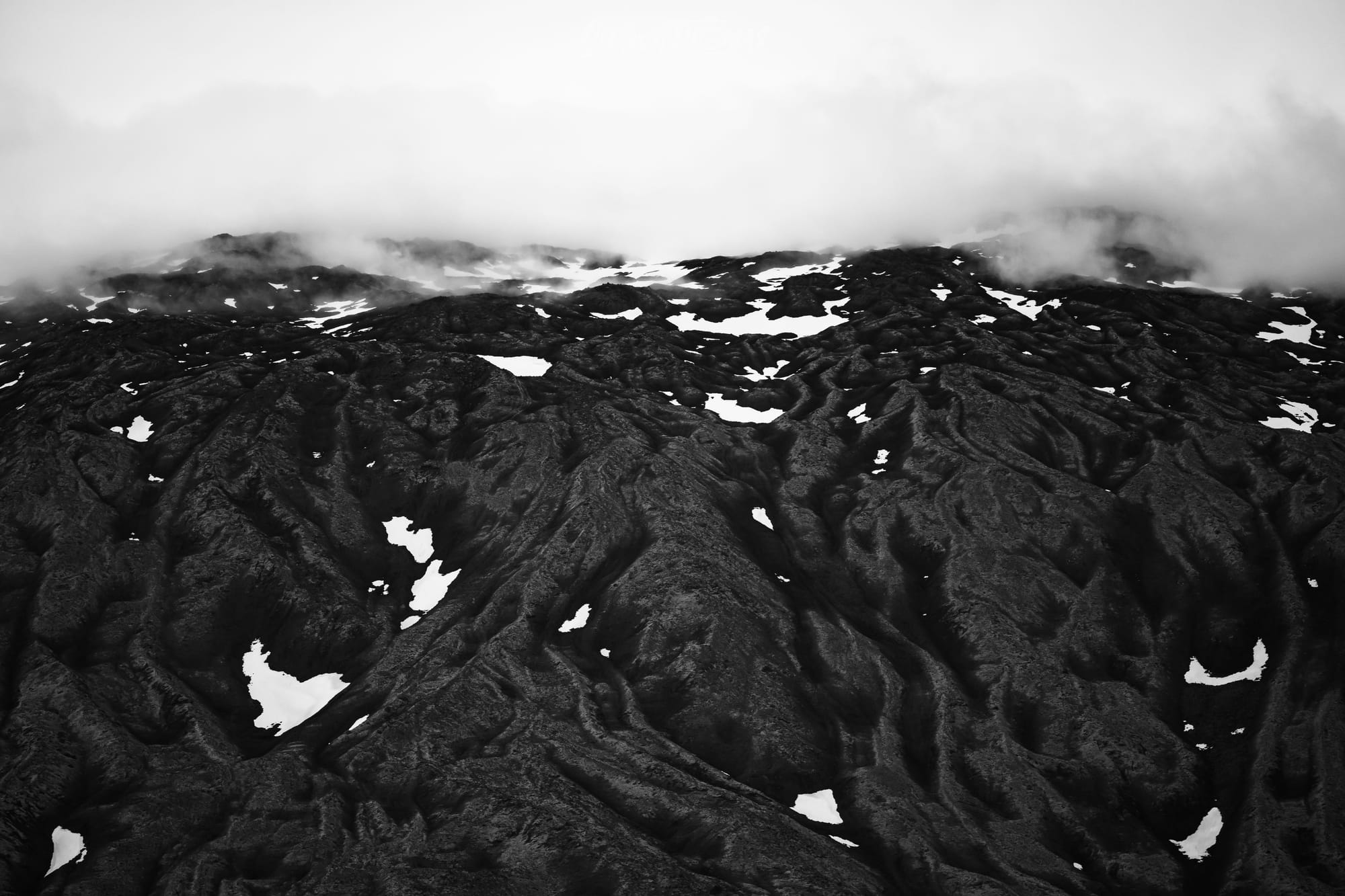
Black lava field, mist rolling in. A wide shot here is chaos. Compressed down, it becomes texture and pattern.
Iceland is famously "wide country," and there are shots where you absolutely want the 14-24. But an enormous number of the images I came home with were compression shots. The lava fields, abstracted down to shape. The distant mountain ranges pulled forward under a moody sky. The isolated subject sitting in a huge frame of negative space.
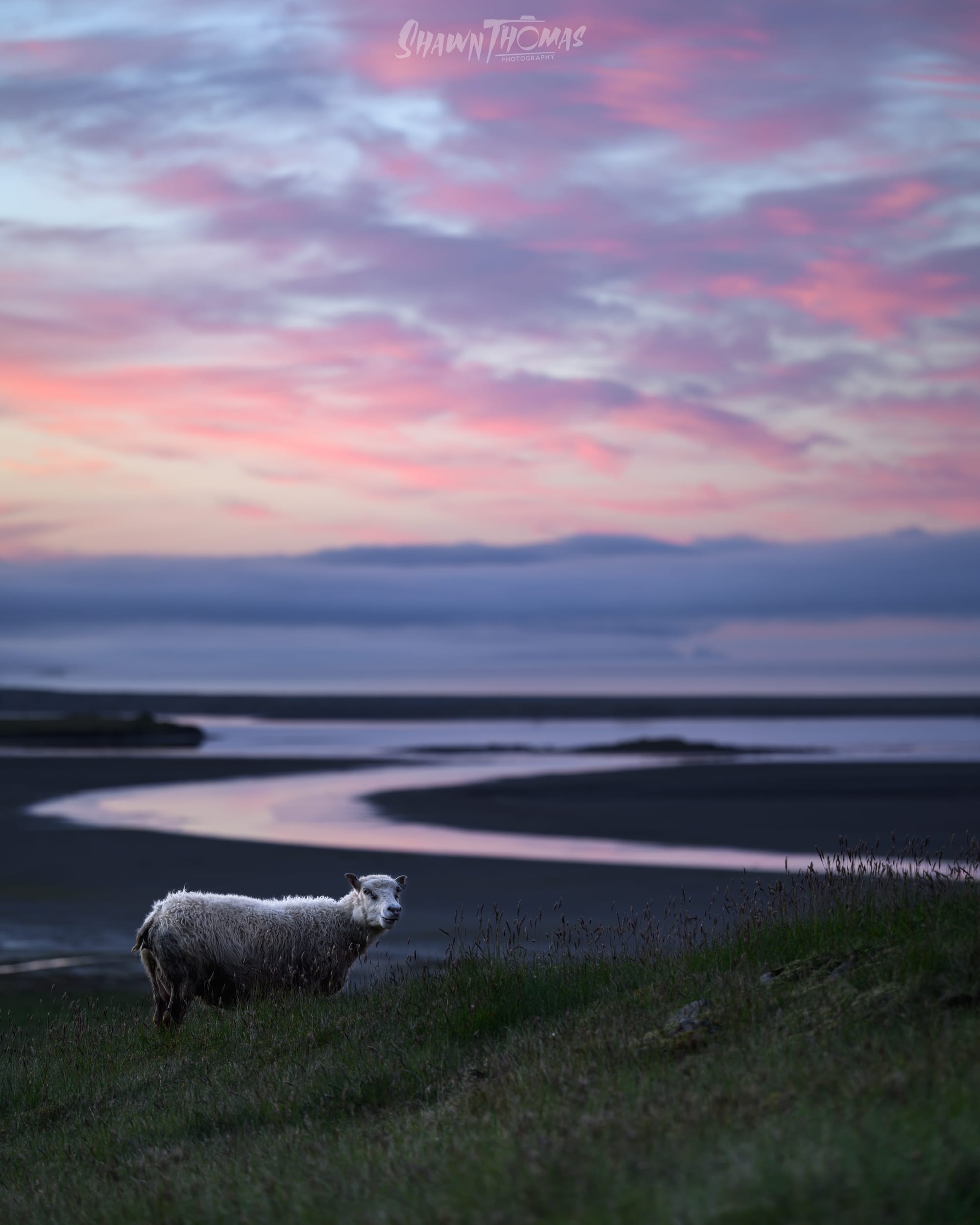
Sheep at sunset. The 70-200 lets the sky be the subject and the sheep be the anchor.
That sheep shot is what I mean about wildlife-eye applied to landscape. My first instinct was not to shoot the whole scene wide. It was to find the punctuation mark in the scene, in this case a sheep, and let everything else be composition around it. That's a wildlife instinct. It doesn't go away because I'm pointing the camera at a mountain.
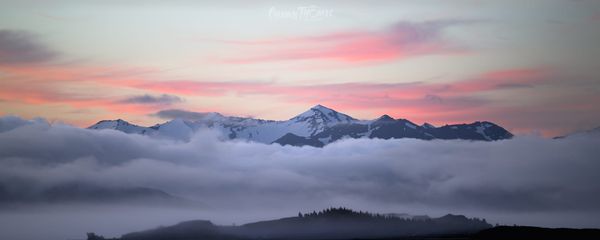
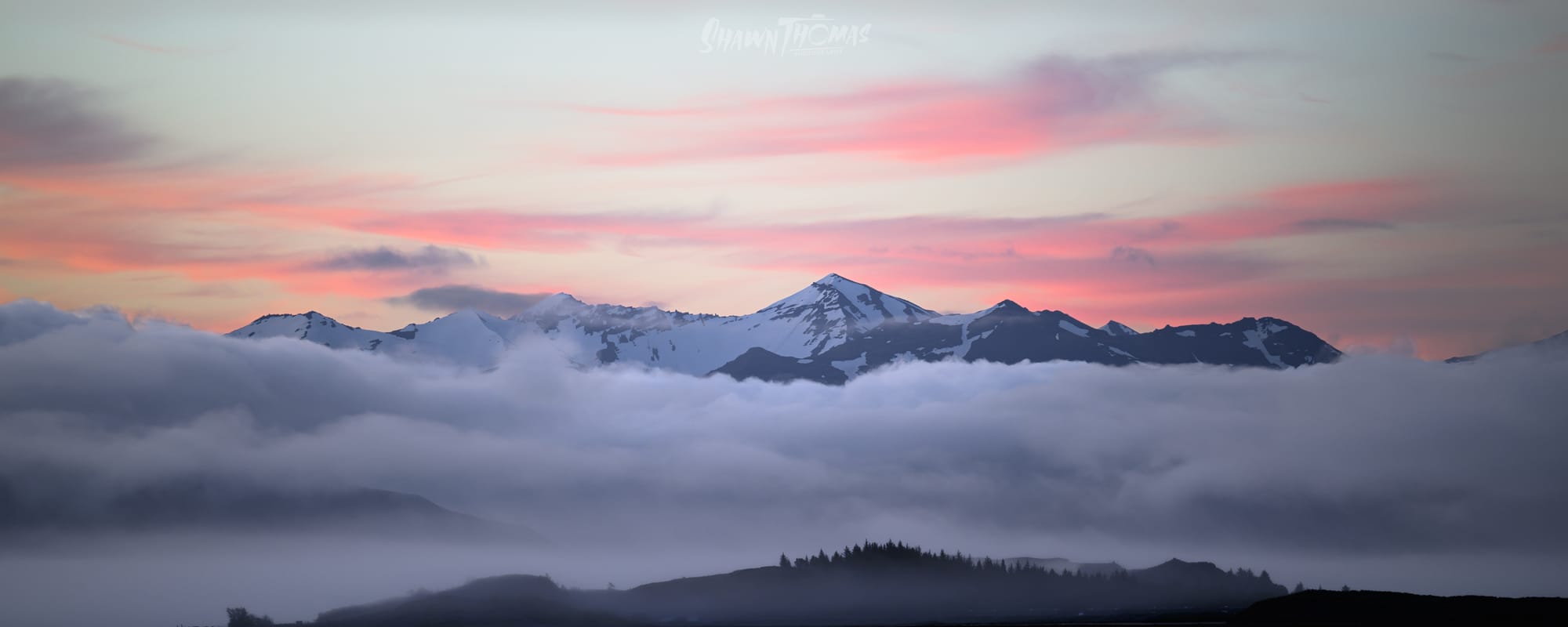
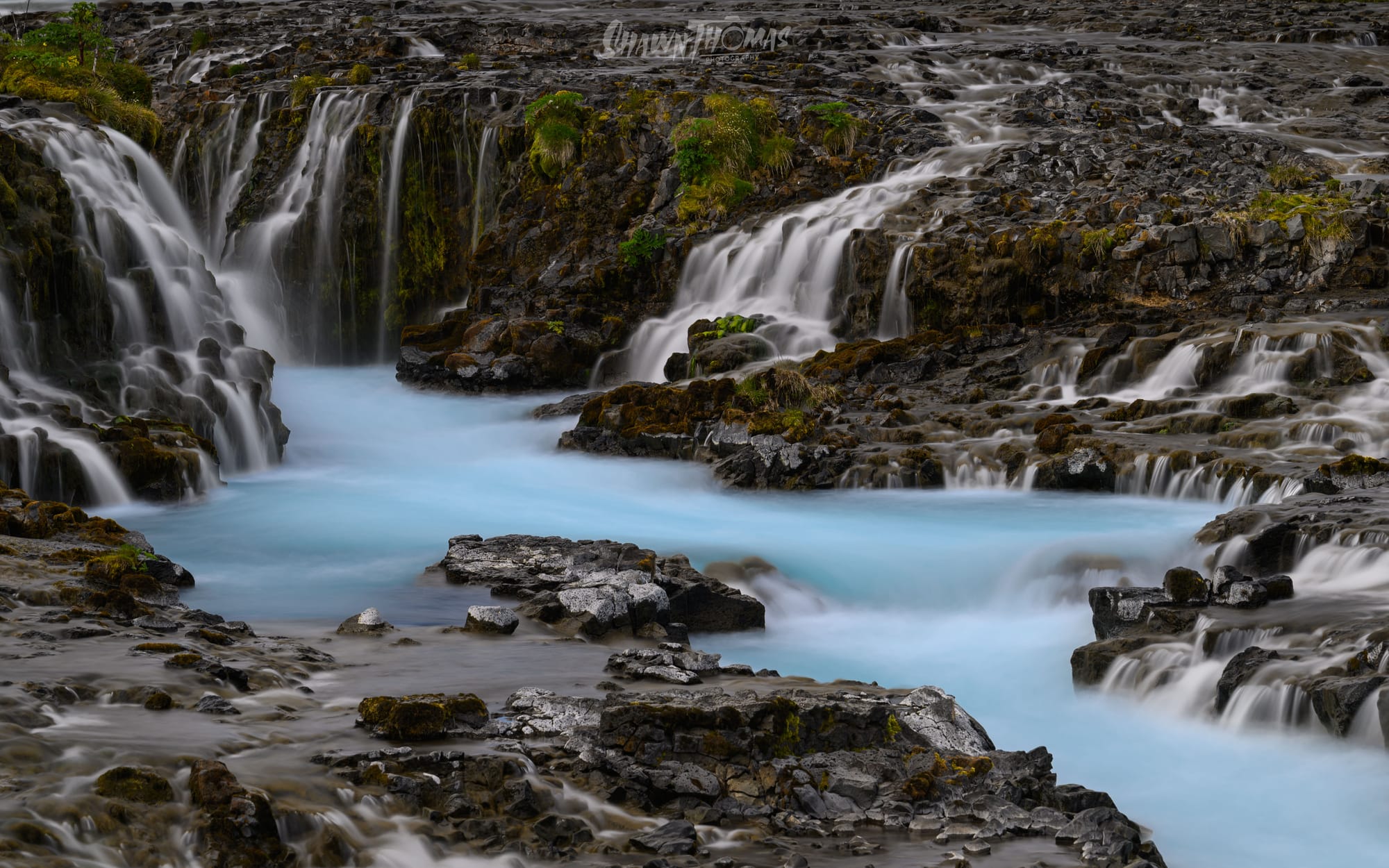
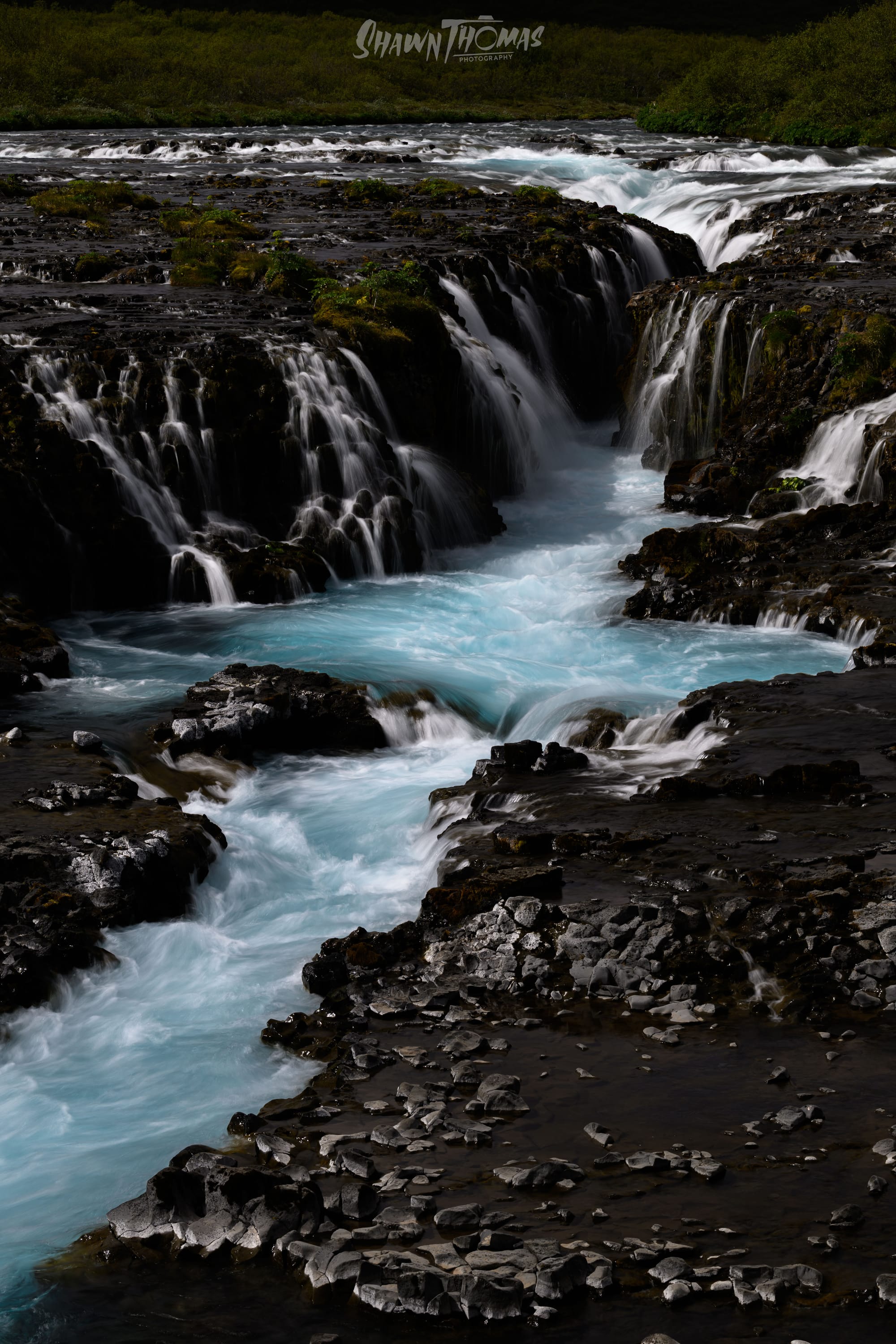
Over the fog line. Compressed enough that the whole ridge feels like it's one plane. This image is impossible where I was at anything less than 135mm.Bruarfoss compressed. A wide would try to include everything. This lets the water be the subject.Same falls, different frame. Vertical, tighter, the water doing all the work. This place was a playground at telephoto.
The 70-200 also excels at what I'd call the second visit to a scene. You show up somewhere iconic, you take the postcard shot with the wide, and then you walk around and try to find your version of the place using the long end. Almost every one of those "my version" shots on this trip was a 70-200 frame.
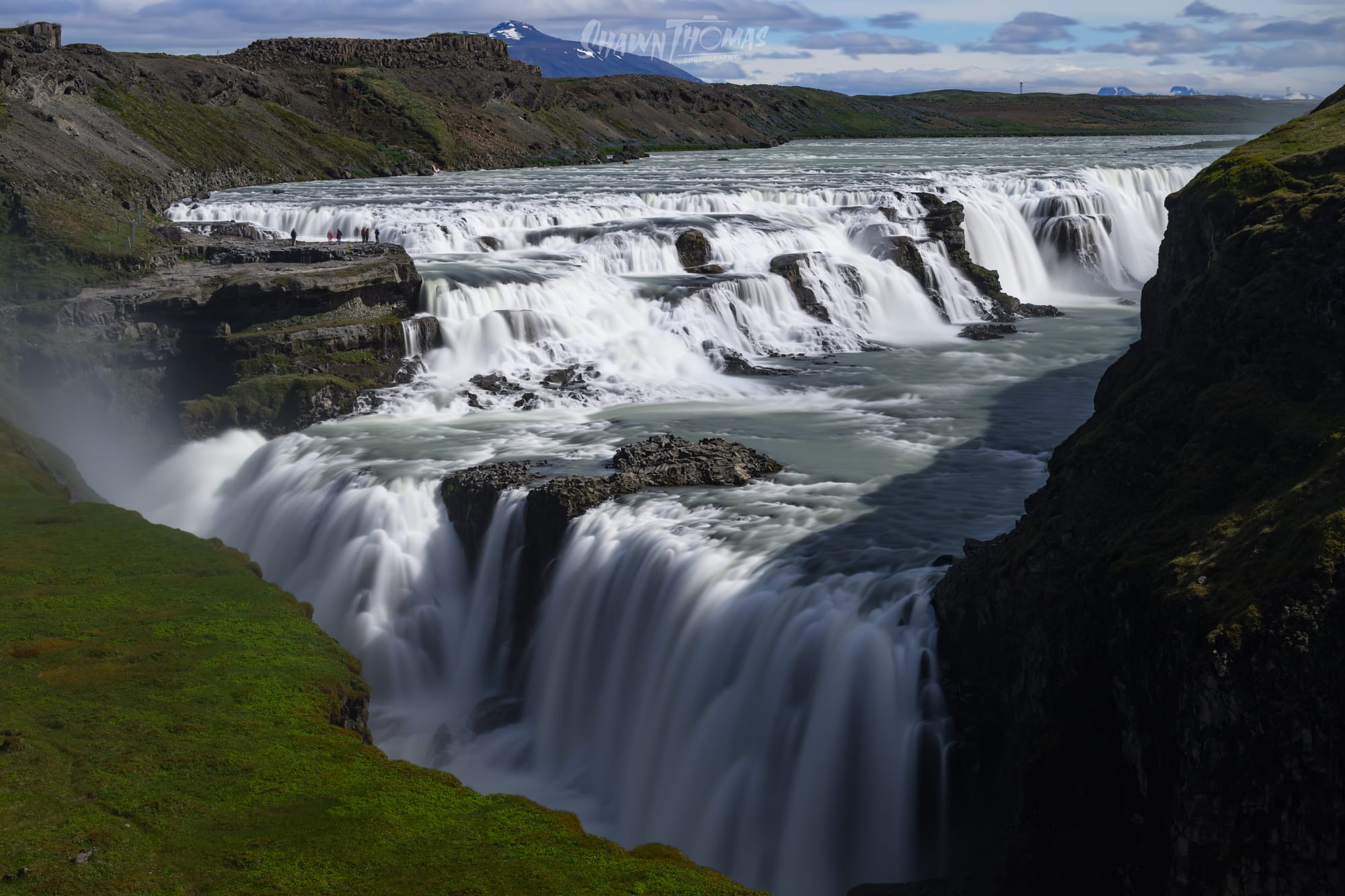
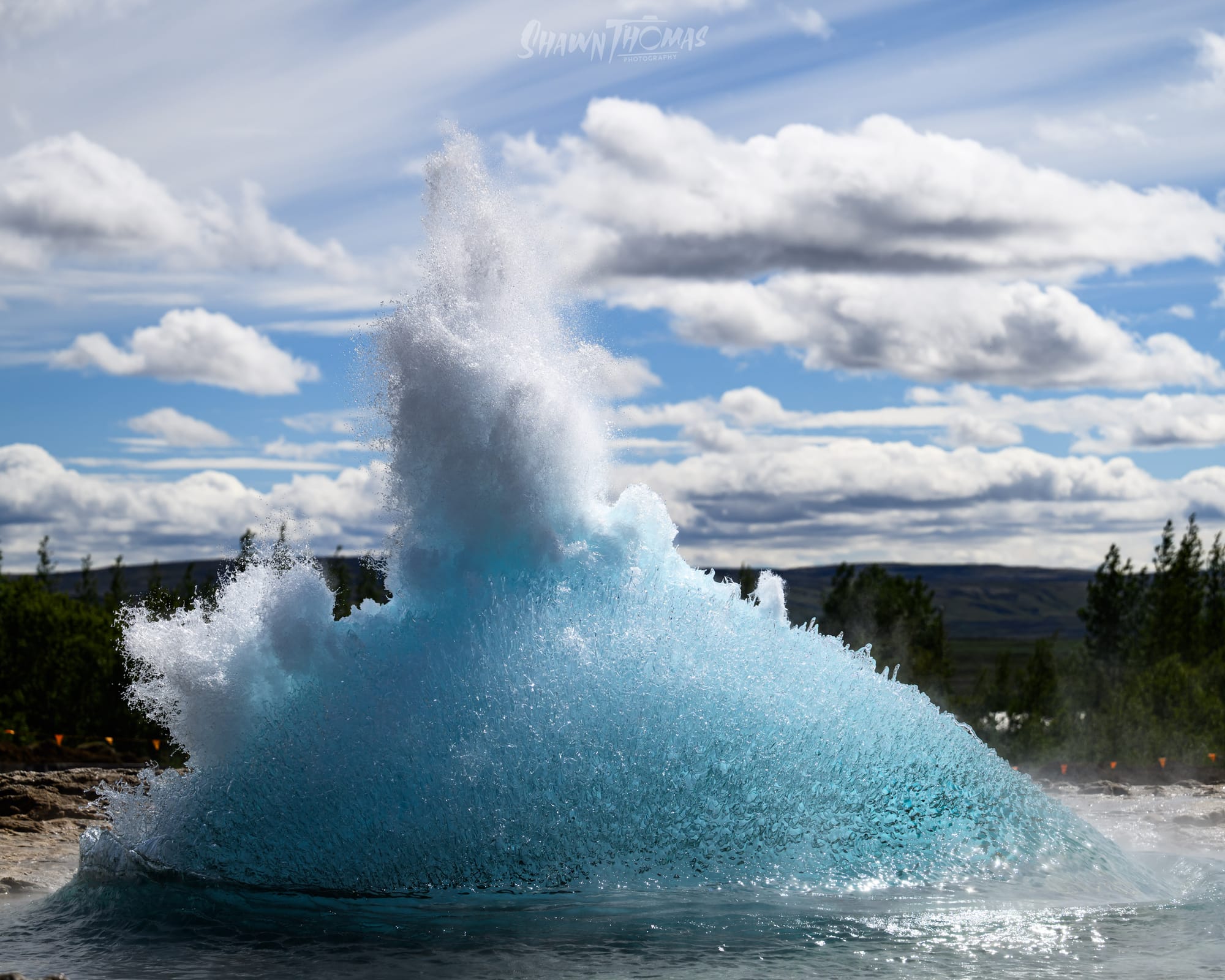
Gullfoss. The postcard shot has been made a million times. This one, with the tourists as scale reference, has not.Geysir. Same instinct. Wide gets you the vent. Long gets you the water column at the moment it breaks.
One thing I hadn't appreciated about the 70-200 until this trip is how well it works as a crowd management tool. At Geysir I could get low and shoot long, using foreground elements (like Geysir as my subject) as a wall between my composition and everyone standing behind it.
When You Can't Beat the Influencer, Make Them the Subject
This one I love and I'm going to include the story.
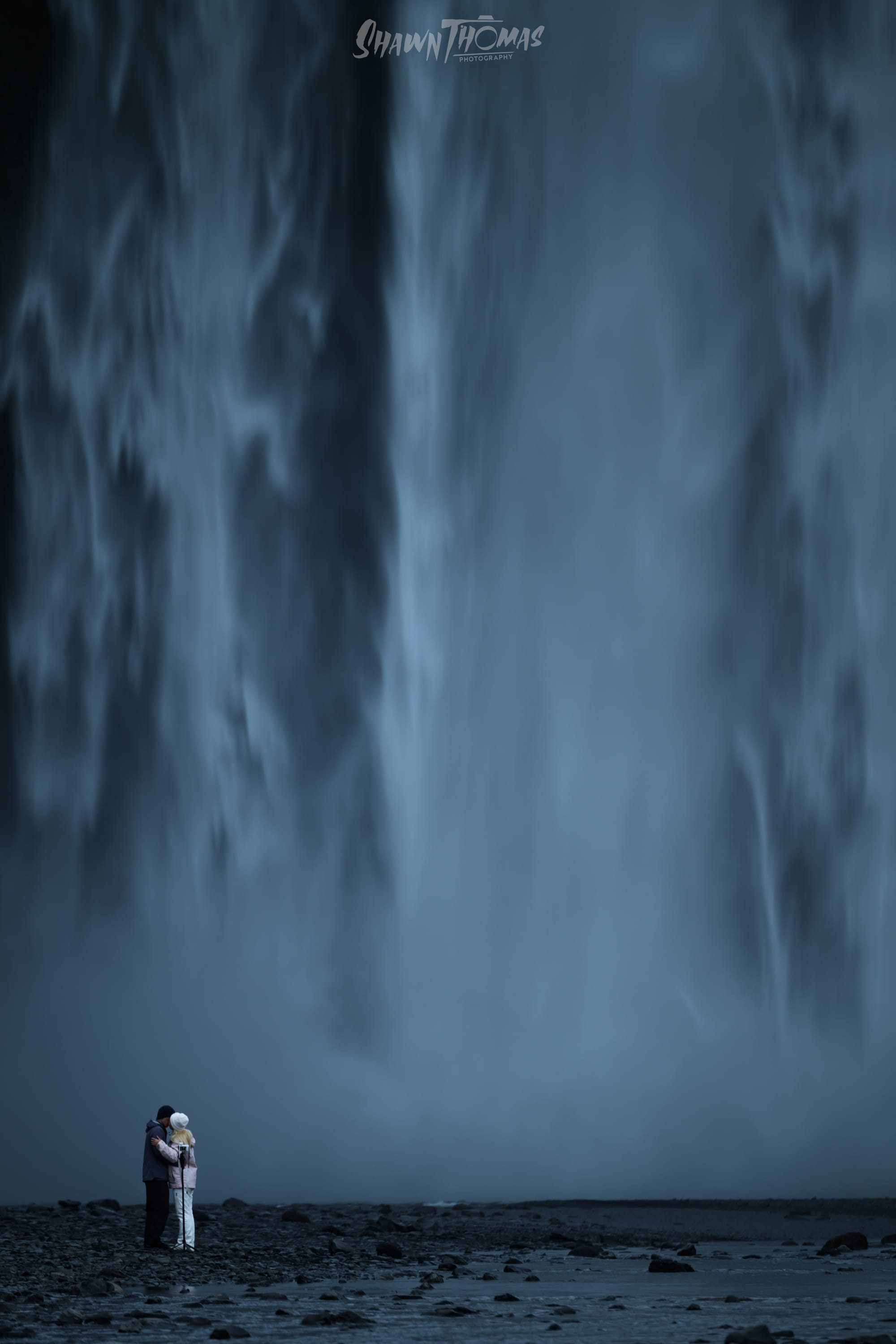
Skógafoss. The couple in the frame stood there for forty-five minutes. So they became the subject.
I set up at Skógafoss for a long exposure. Composed the shot. Set the ND. And two influencers walked into the base of the falls for a photoshoot, and stayed. Forty-five minutes. Wouldn't leave. Every attempt to wait them out failed. Eventually I just accepted the situation and reframed the shot so they were the subject, tiny at the base of the enormous falls, giving the frame a scale reference I never would have gotten intentionally. The 70-200 let me pick them out and make the composition work with the human element rather than around it.
Sometimes the lens saves the shot the tourists tried to ruin.
The Practical Stuff
I paired this lens mostly with the Z8 on a Peak Design Pro tall tripod with a leveling base and an Acratech head. The L-bracket compatibility with the Acratech makes rotating between portrait and landscape orientation genuinely fast, which matters on the 70-200 because the tripod foot is heavy and repositioning the whole rig is more of a production.
Handheld work is completely doable on the Z8, which has great IBIS and pairs well with the lens's own VR. I shot handheld a lot when we were moving fast between locations. It's a heavy lens, but not unmanageable, and it balances well on the bigger bodies.
One note worth flagging for anyone considering this as a travel lens. On days when I was primarily doing wildlife, like the puffin day at Ingólfshöfði, this lens rode as a second camera on my side and I basically didn't touch it. That's fine. Some days you don't need every focal length. But I never regretted having it with me, and on landscape days it was the lens I reached for most.
Portraits, Too
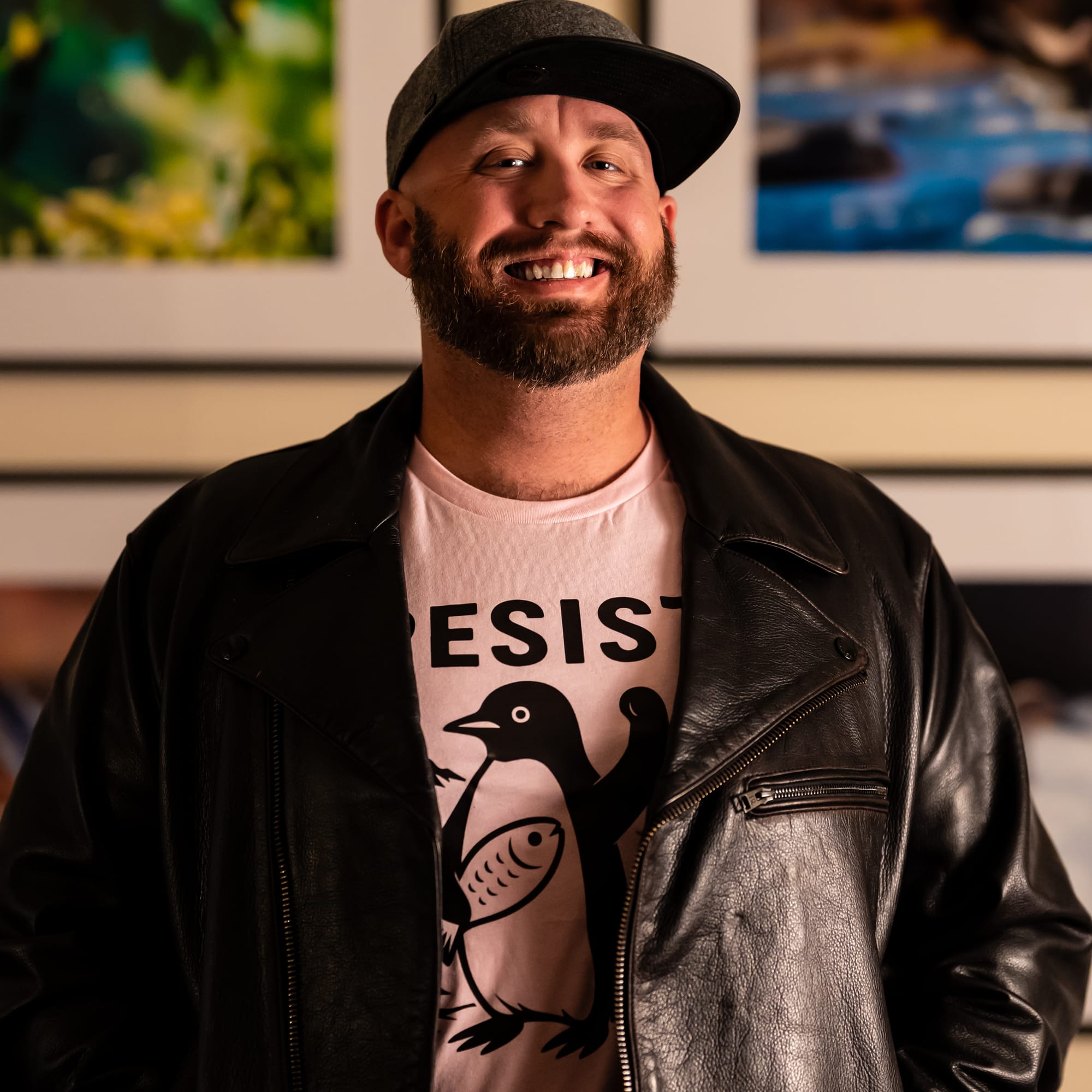
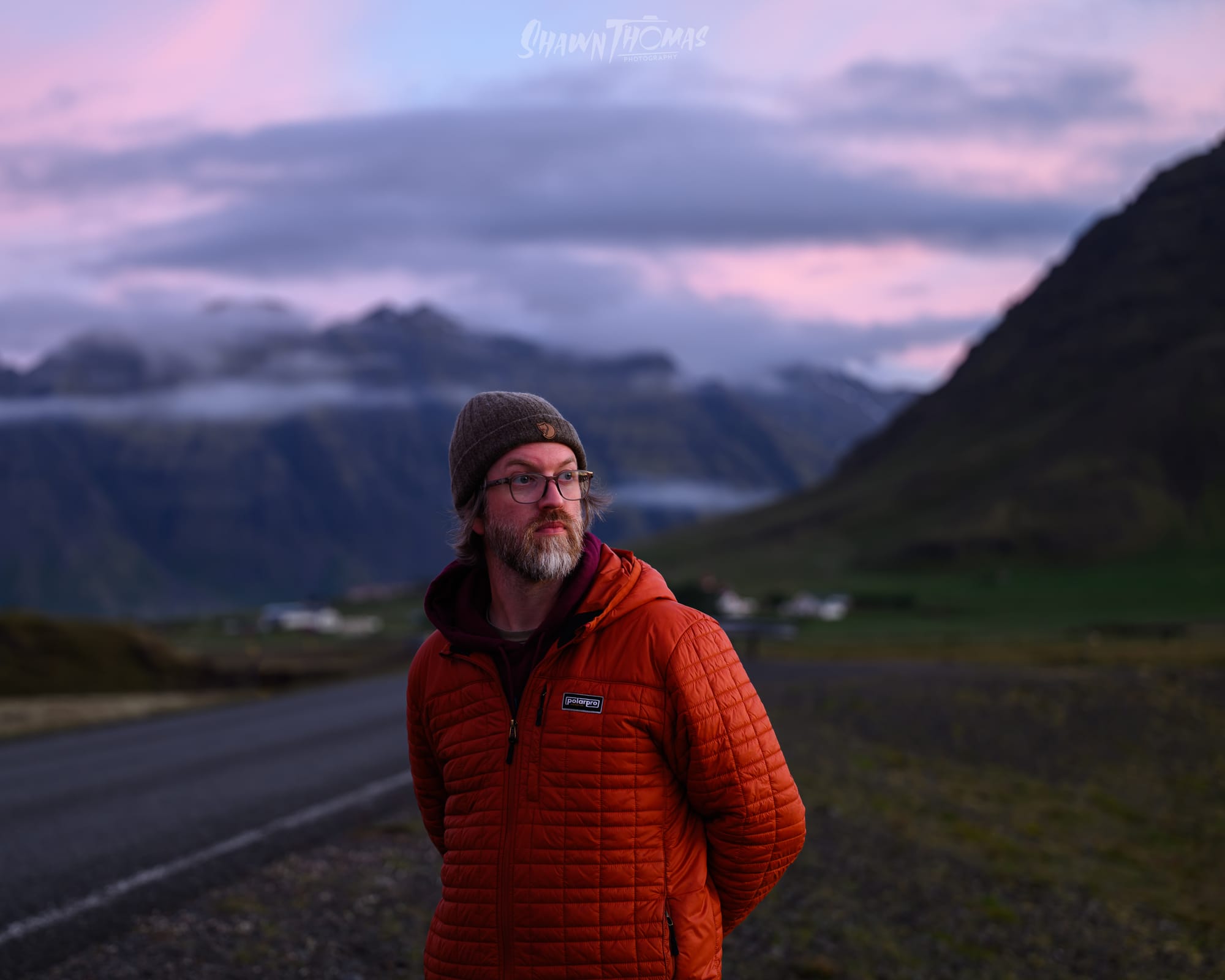
Say hi to Marc, the trip's fearless leader. Portrait with the 70-200 because I had it on me.
I don't usually shoot portraits but I do enjoy it when I can. When everyone was standing around watching the most incredible sunset we have ever seen, I turned the 70-200 on Marc (who runs these trips, you can find him here) and got what might be my favorite portrait I've ever taken. That's not a bad accidental use case for a landscape lens.
The Verdict
I love this lens. I used it more than the 14-24 on a landscape trip, in Iceland, which surprised me, and I think it's because the way I see is compressed and isolated, not wide and embracing. A 70-200 rewards that instinct in a way a wide lens simply can't.
I'm going to keep this V1 until it dies or Nikon fixes the filter compatibility on the V2. If neither happens, we're going to be together a long time.
If you're a landscape shooter who defaults to wide, try leaving it in the bag for a day and shooting only with a 70-200. You'll find compositions you didn't know were there. If you're already a wildlife shooter picking up landscape, this lens is going to feel like home.
Either way. Great glass. Right tool. And I don't care that there's a V2.