WILD: Level
WILD Part Four - Level: Getting eye level with your subject is the simplest concept in wildlife photography and sometimes the hardest to actually do. Here's why it changes everything.
– 5 min read
WILD Part Four - Level: Getting eye level with your subject is the simplest concept in wildlife photography and sometimes the hardest to actually do. Here's why it changes everything.
Of all four principles in the WILD framework this one is the simplest to explain. Get level with your subject. That's it. You could close the post here and go try it and you'd come home with better images.
Simple to understand and easy to accomplish are two very different things though. Getting truly level with a duck on the water means getting your lens as close to the surface as physically possible, which usually means lying flat on a dock in the cold at six in the morning while the duck stares at you with complete indifference. Getting level with a shorebird on a beach means wet sand in places you'd prefer not to have wet sand. The concept takes thirty seconds to grasp. The commitment to actually doing it every time is what separates the people who understand it from the people who use it.
Here are a bufflehead and a mallard.
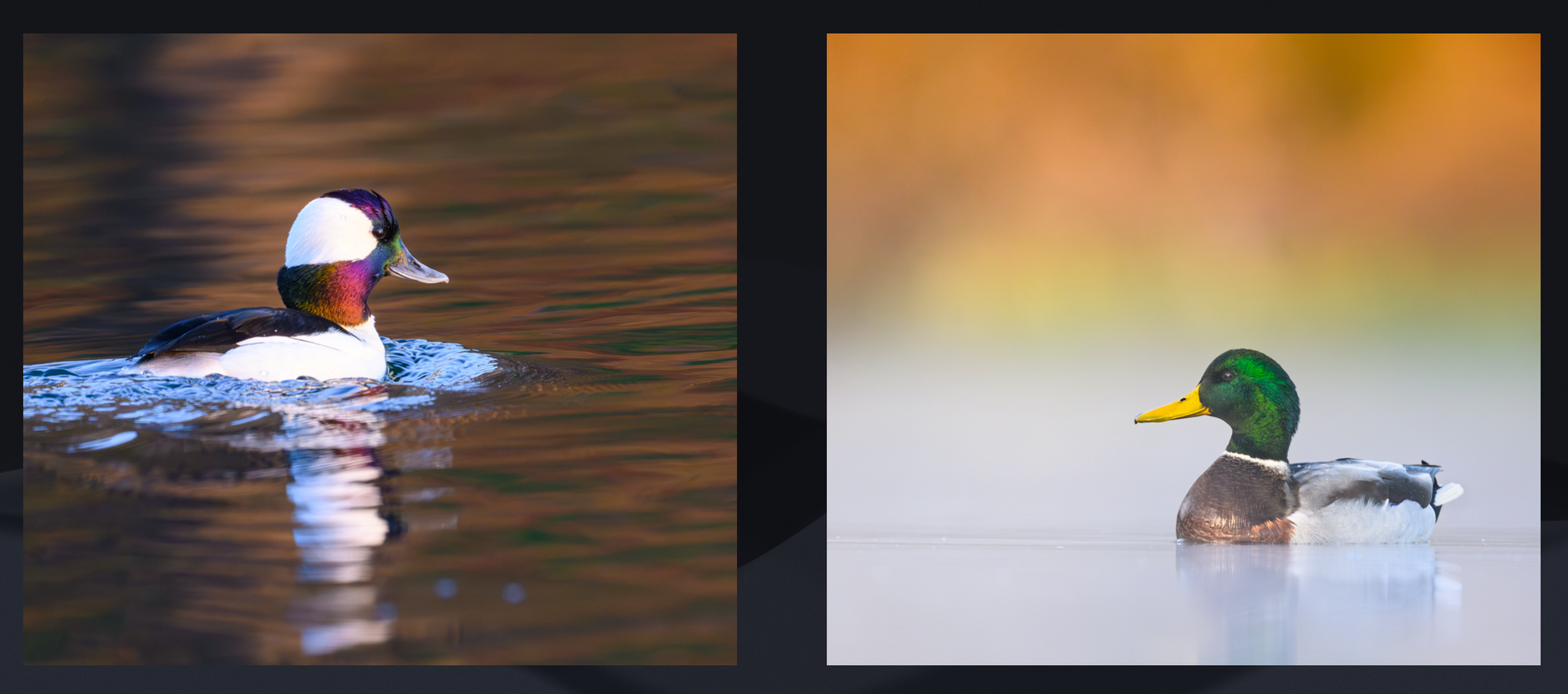
The left image is a record shot. You can identify the bird, the detail is there, technically it's fine. The right image puts you in the world with the bird. The horizon drops, the background opens up, the subject has presence and weight. Nothing changed except where the camera was relative to the bird.
That's Level.
Water level changes everything
The most dramatic version of this principle is water level shooting and it's where I see the biggest difference between a snapshot and something genuinely compelling.
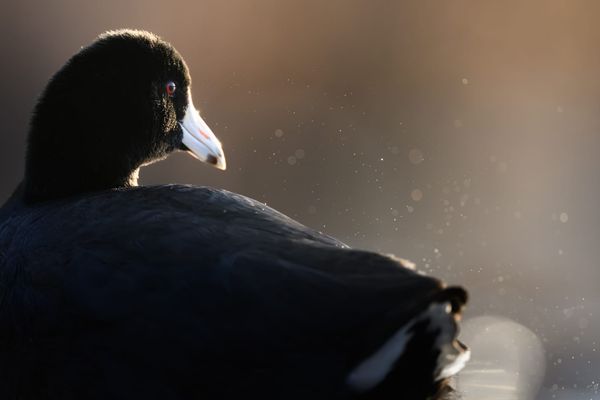
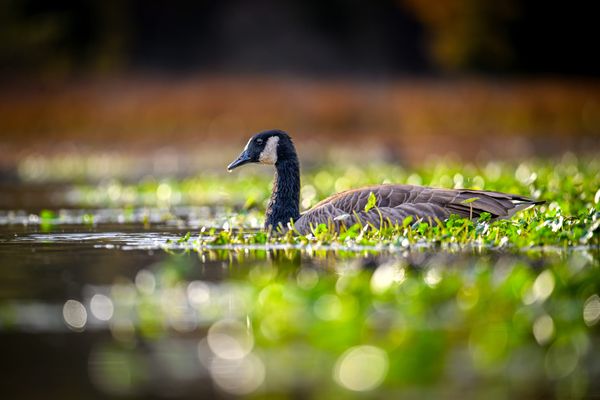
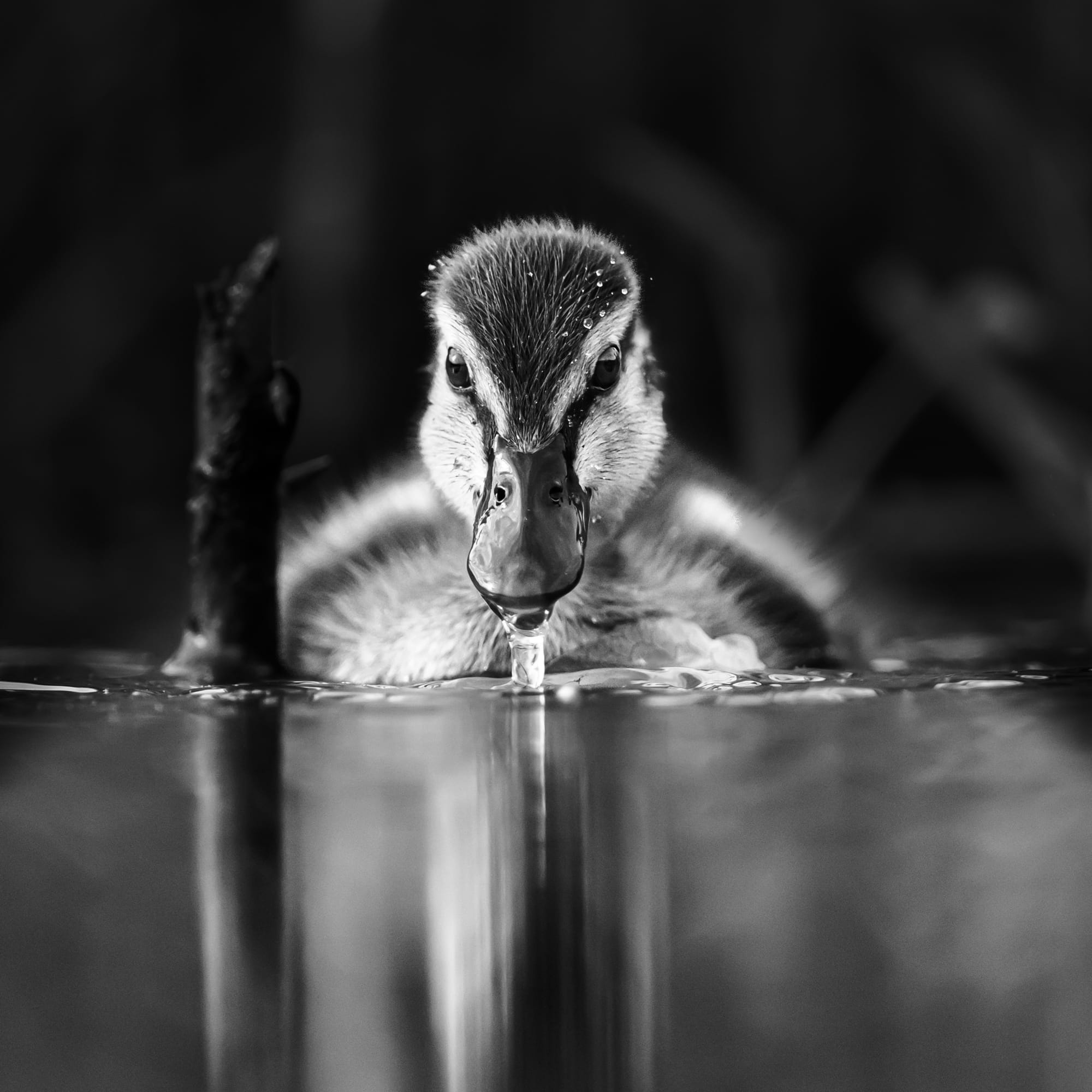
When you're shooting waterfowl from a standing position you're looking down at them and the water becomes a flat plane of texture below the bird. When you get your lens to water level, or as close as you can safely get, the water in the foreground goes silky and reflective, the background compresses and blurs, and the bird suddenly exists in its environment rather than sitting on top of it.
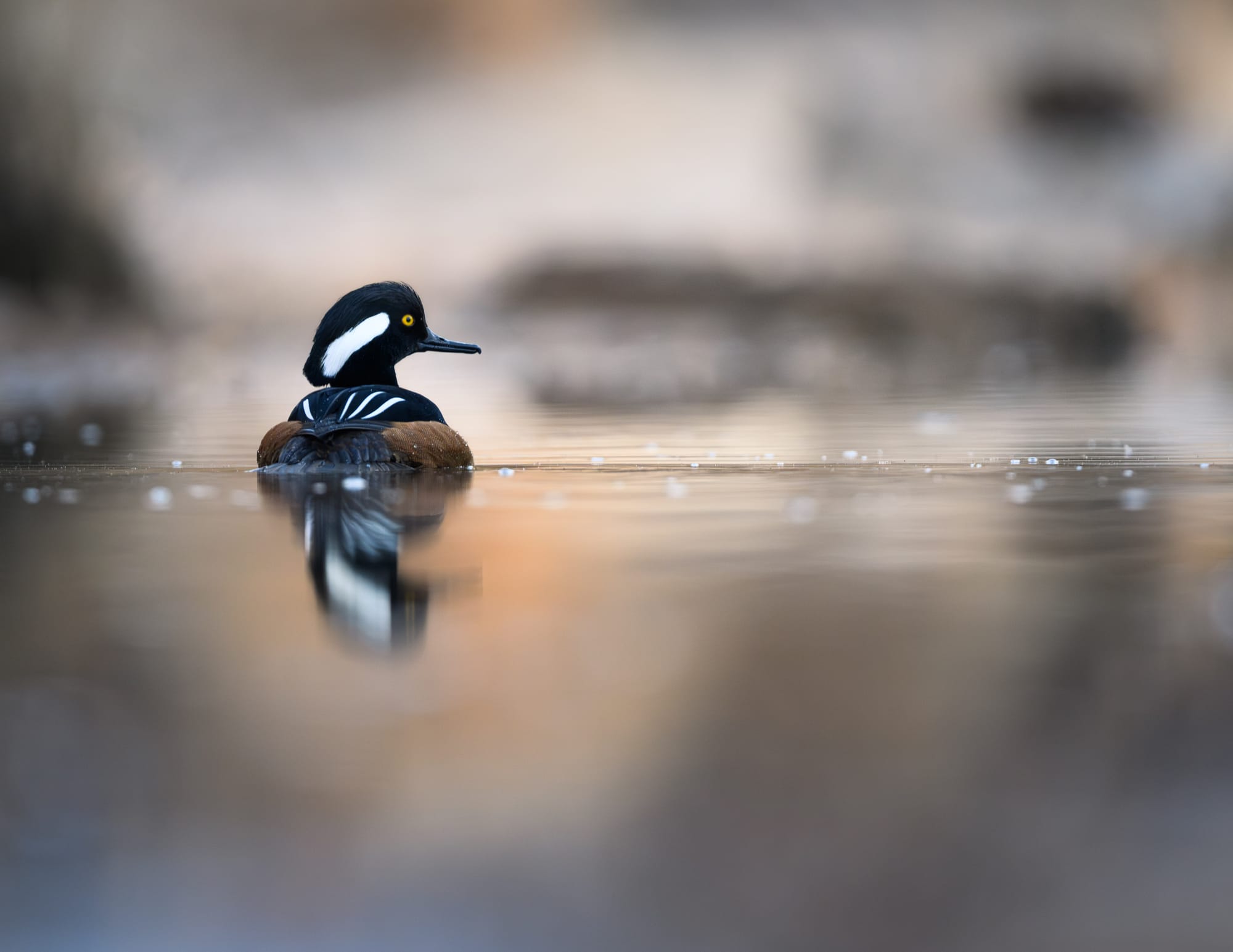
The difference is not subtle. It's the difference between a photograph you'd scroll past and one you'd stop on.
For ducks I'm often lying flat on a dock or a bank, lens as close to the surface as I can get it without introducing water into the equation, which I have done exactly once and do not recommend. Shorebirds on a beach are the same story. A sanderling running the tideline at eye level with the wet sand reflecting and the ocean blurred out behind it is a completely different image than the same bird photographed from above.
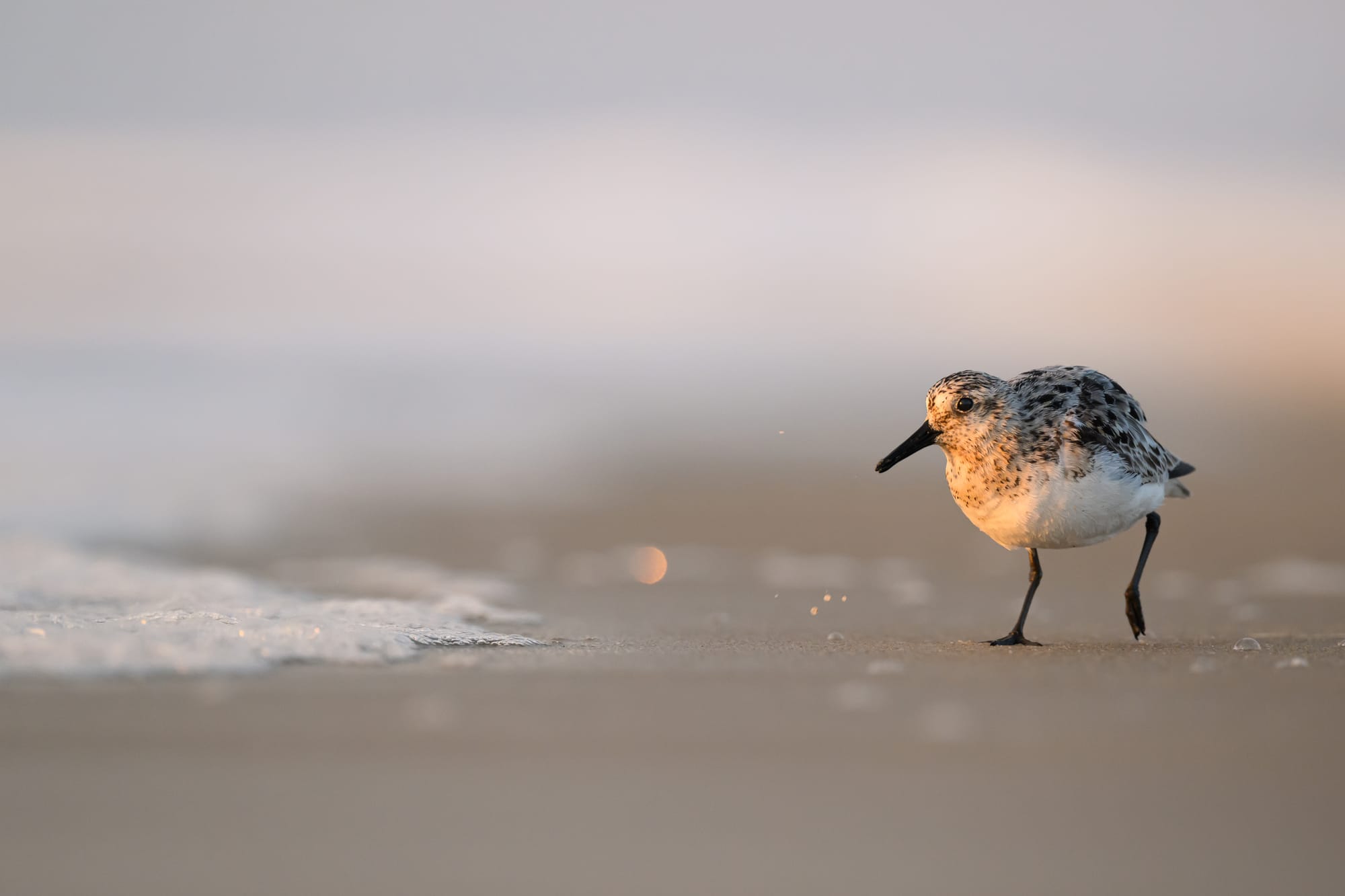
You have to get on your stomach. You will draw looks from people walking by. It is worth every bit of it.
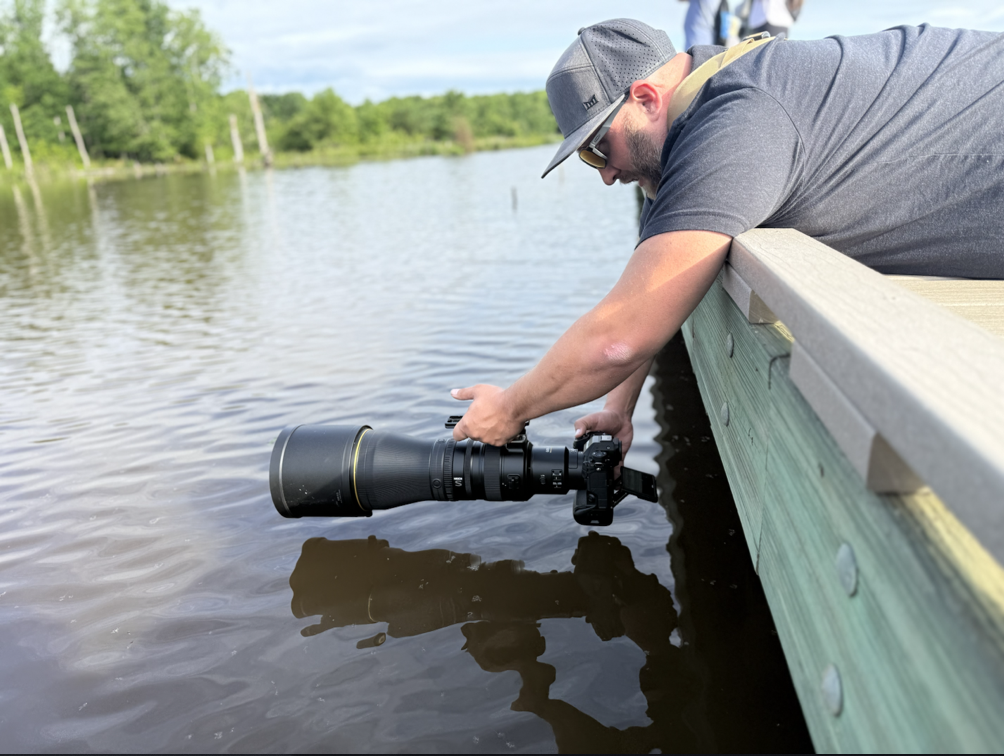
This is what it looks like in practice. I spend a lot of time on the ground, on docks, hanging over railings, crouching at the water's edge in varying degrees of discomfort. The images are worth it. Also if you do this, maybe make sure your gear is insured.
When higher works
I don't want to make this sound like a rule because it isn't. There are situations where a higher angle is exactly right and forcing yourself low would hurt the image.
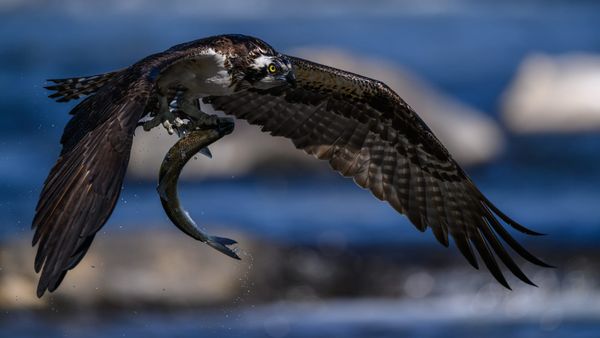
Osprey are a good example. When an osprey hits the water and comes up with a fish it's exploding upward, wings spread, water streaming off. If I'm at roughly the same height as where it breaks the surface I'm level with that burst of energy. Going lower wouldn't add anything.
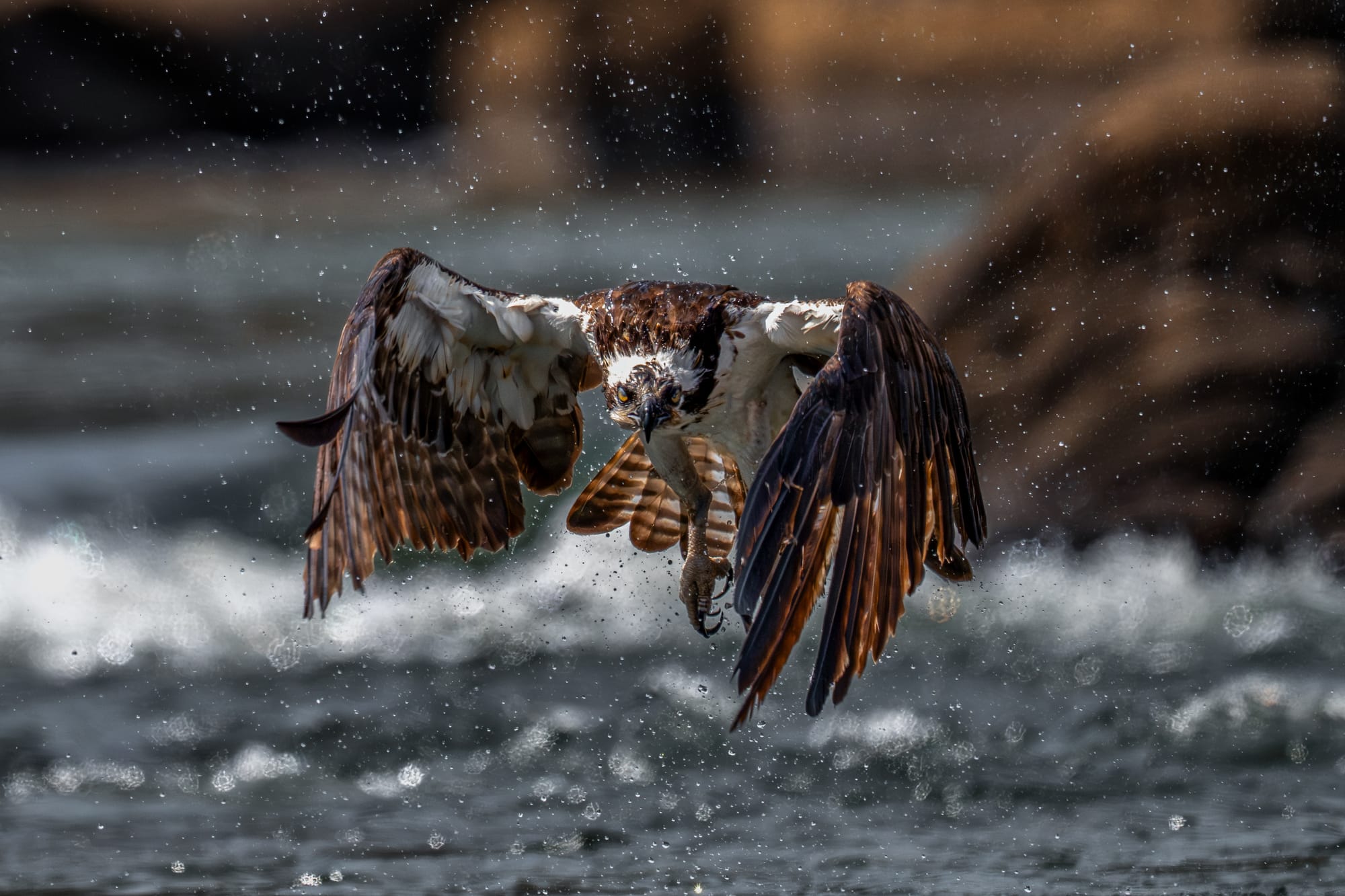
Extreme perspectives work too, shooting up through a field of flowers with a bird on a stem above you, or way down looking at birds on the water so the surface becomes an abstract pattern. These work precisely because they're unusual and deliberate. The difference between an intentional perspective and a lazy one is intention. If you're standing up because the angle genuinely serves the image, great. If you're standing up because crouching is inconvenient, get lower.
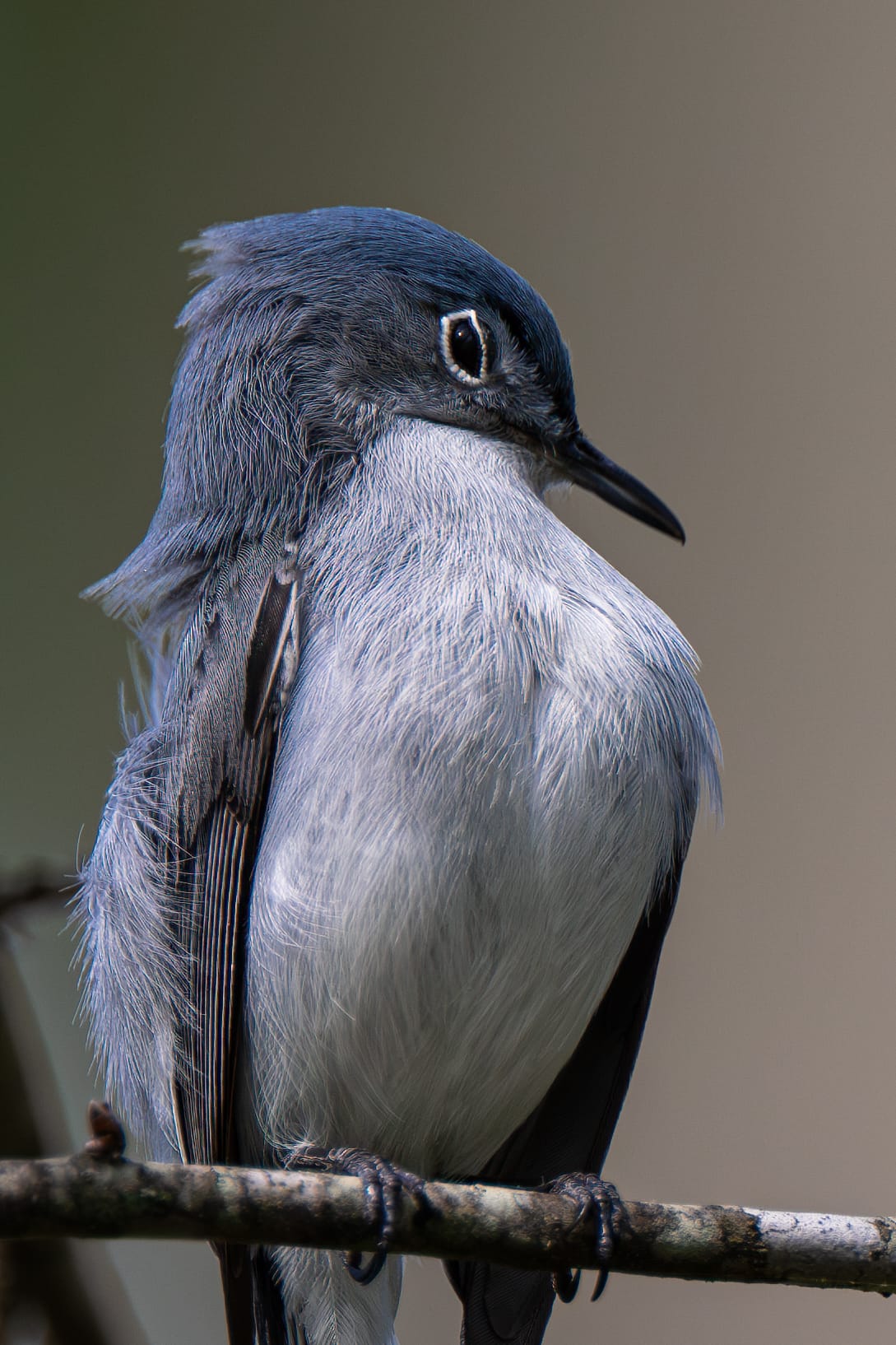
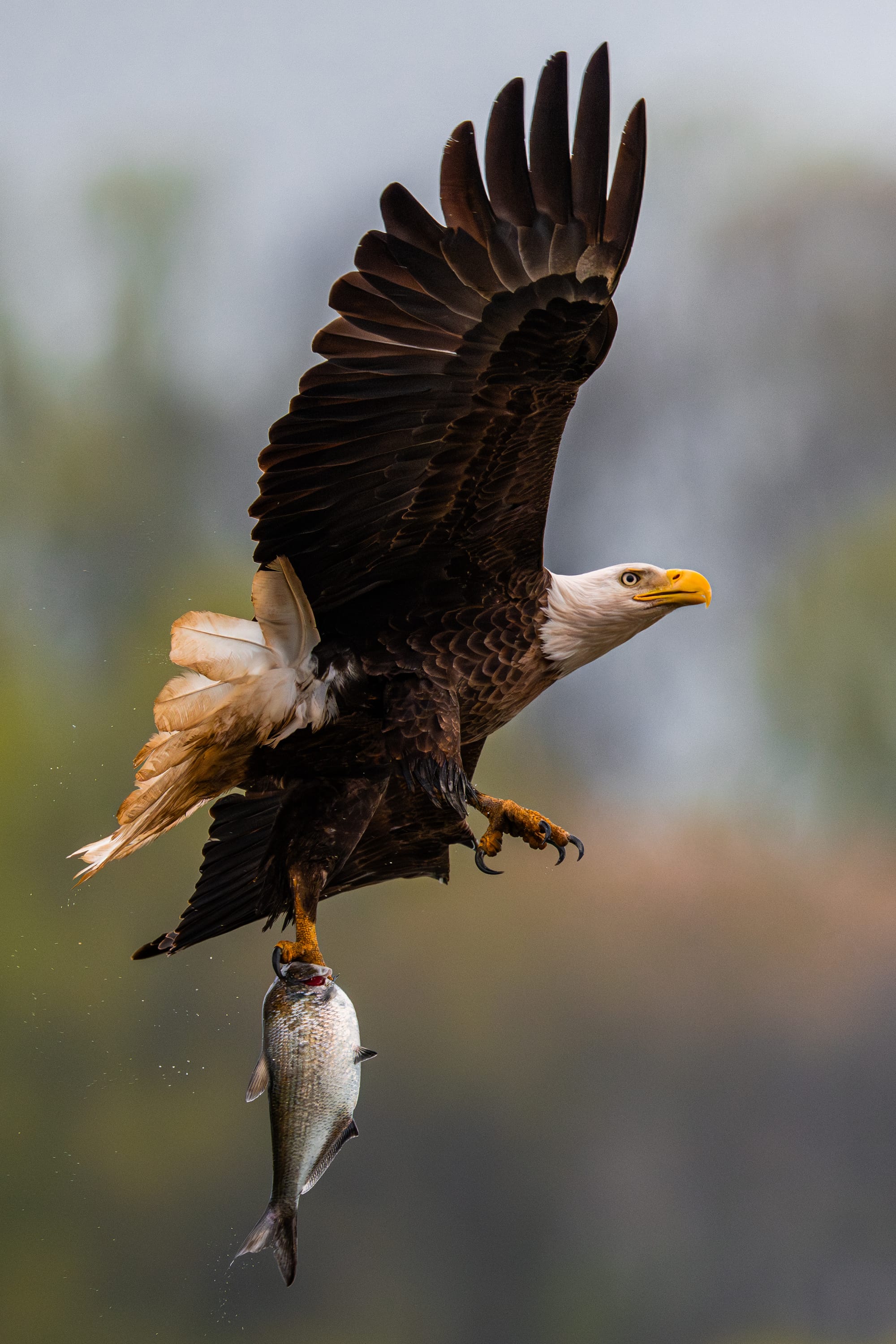
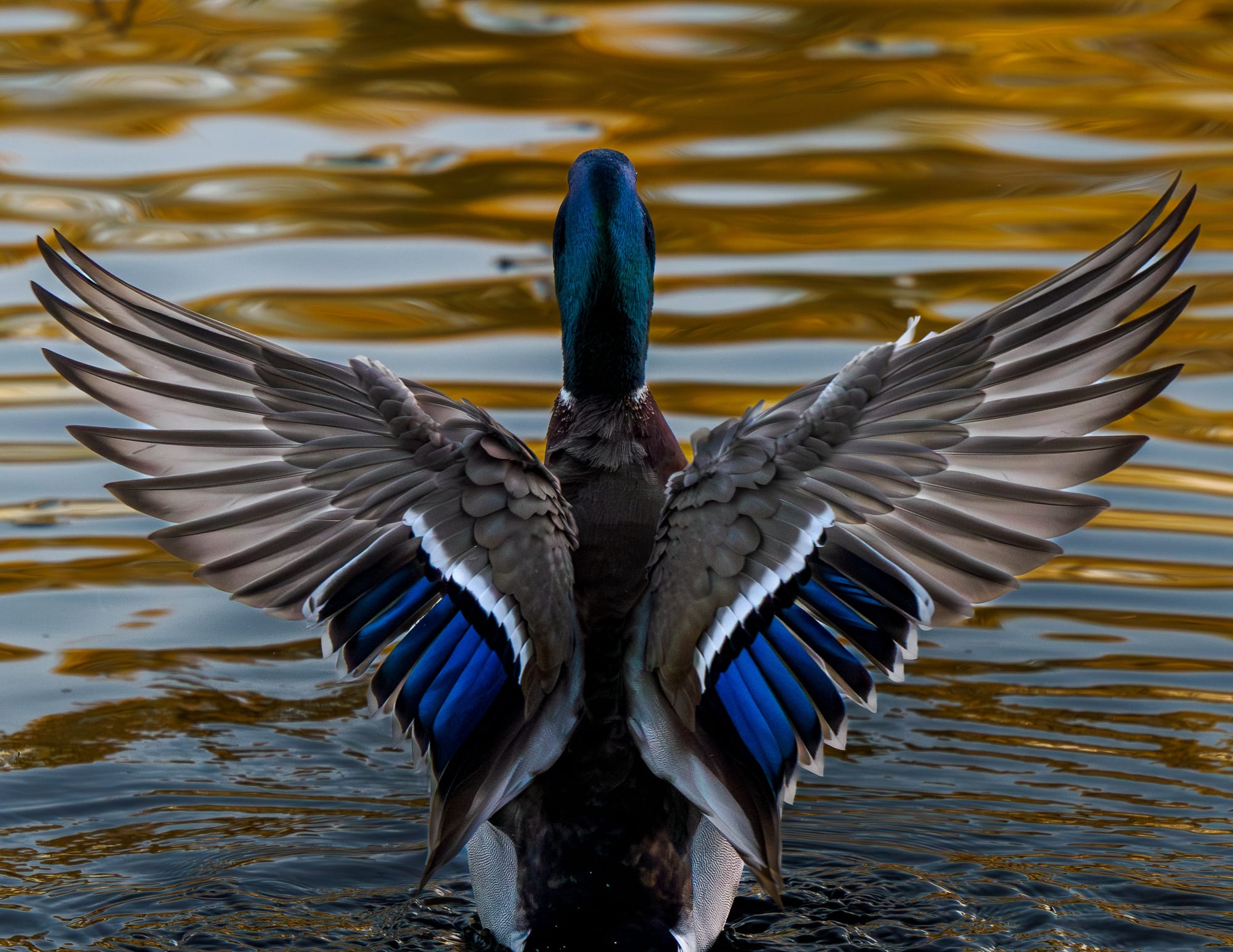
That little songbird looks like batman, and fun fact I shot that duck on an OM-1
The practical reality
Getting level means reading the scene quickly, and adjusting yourself to the best of your ability to find the perspective you want.
It also requires accepting that you're going to get dirty. Wet grass, mud, sand, whatever the ground is offering that day is going where you don't want it. I have ruined more pairs of pants doing this than I care to count and I have stopped caring entirely. The image on the back of the camera either justifies it or it doesn't, and usually it does.
A camera with a fully articulating screen helps more than most people realize, even if it is impossible to see hanging off a boardwalk shooting backlit images into the sun. It means you can get the lens to ground level without putting your face in the mud. It's one of the most underrated features in modern mirrorless bodies and I use it constantly.
What Level actually does
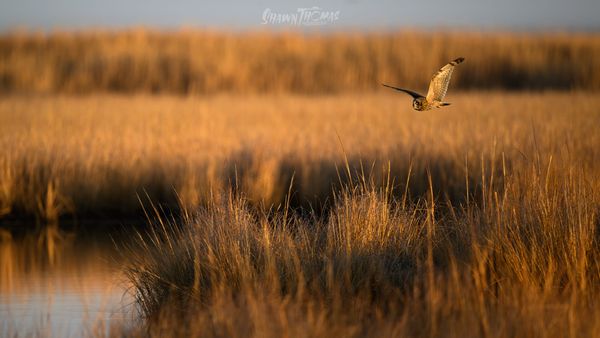
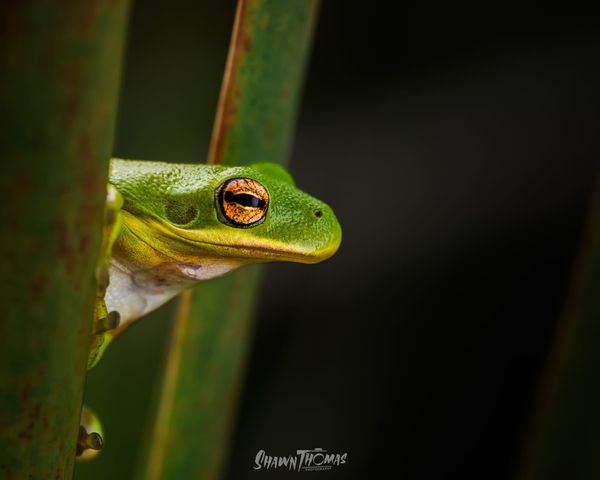
There's something that happens when you're eye level with a wild animal that goes beyond the technical. You're in their world. The image that comes out of that position has an intimacy that you can't manufacture from above. Not just "nice bird" but something closer to presence. Like the viewer was there.
That feeling is what we're chasing with every principle in this framework, and Level is one of the most direct paths to it.
Get low. Get dirty. Get the shot.
Next week is the last one: Depth. It's the most complex principle in the framework and the one I could honestly talk about the longest. How your background isn't just the stuff behind the bird, it's half the photograph. See you Tuesday.